
If you own a Subaru, chances are you’ve already heard — from a forum, a friend, or your own mechanic — that head gaskets are a well-known weak point for the brand. This isn’t internet myth or bad luck; it’s a documented design characteristic tied to specific engines, and it has a direct, predictable effect on what you’ll pay to fix it.
This post is part of our complete guide on head gasket repair costs and timelines — see the full breakdown for all repair scenarios below.
Why This Is a Known Subaru Issue
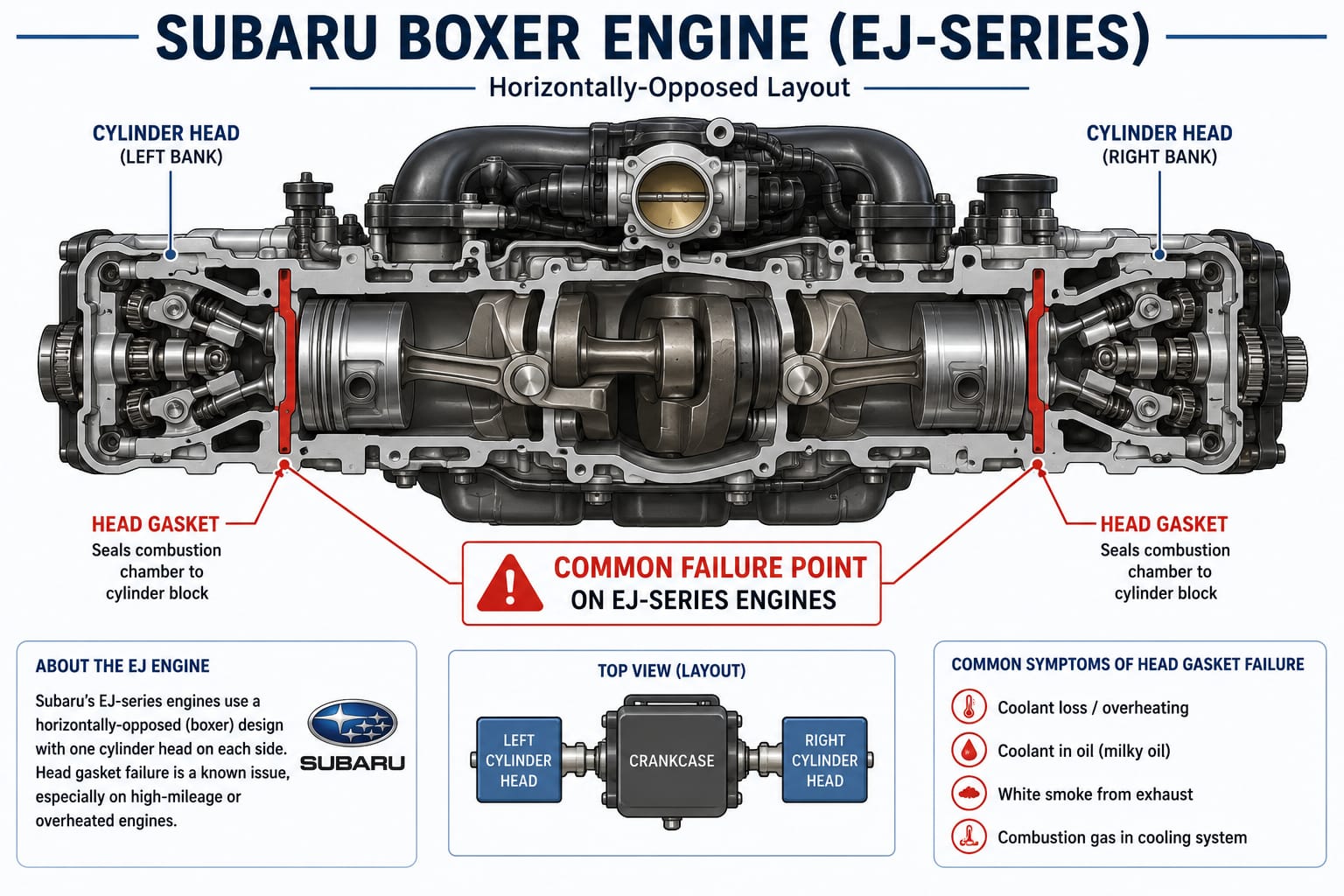
Subaru’s signature engine layout is the “boxer” configuration, where cylinders lie flat and horizontally opposed on either side of the engine block, rather than in a line (inline) or angled V shape. This design lowers the car’s center of gravity and gives Subarus their distinctive driving feel, but it also means the head gaskets sit in a tight, low position that runs hotter and is harder to access than a conventional layout — both of which have historically contributed to higher gasket failure rates on certain model years.
Why Subarus Cost More to Repair Than Most Cars
Because of the boxer layout, there are two cylinder heads instead of one, and both sit tucked low against the frame rails. Reaching them requires more disassembly than a typical inline-4 engine, and the labor time is what really drives the cost difference — not the parts themselves. A Honda or Toyota with a simple inline-4 engine is usually one of the more affordable head gasket repairs on the market; a Subaru with the same basic problem tends to cost noticeably more purely due to the extra hours involved.
Which Subaru Engines Are Most Affected
- 2.5L EJ25 engines — the most frequently discussed, common in early-to-mid 2000s Outback, Forester, and Legacy models
- 2.2L EJ22 engines — less commonly affected, but not immune
- Newer FB-series engines (introduced early 2010s) — generally considered less prone to this specific issue, though routine maintenance still matters
What Actually Drives Your Specific Quote
- Whether one or both cylinder heads need new gaskets
- Whether either head needs machining due to warping from a prior overheating event
- Local labor rates in your area, since this job is overwhelmingly labor-driven rather than parts-driven
- Whether you also replace the timing belt and water pump during the same repair (see below)
The Timing Belt Connection — A Money-Saving Tip
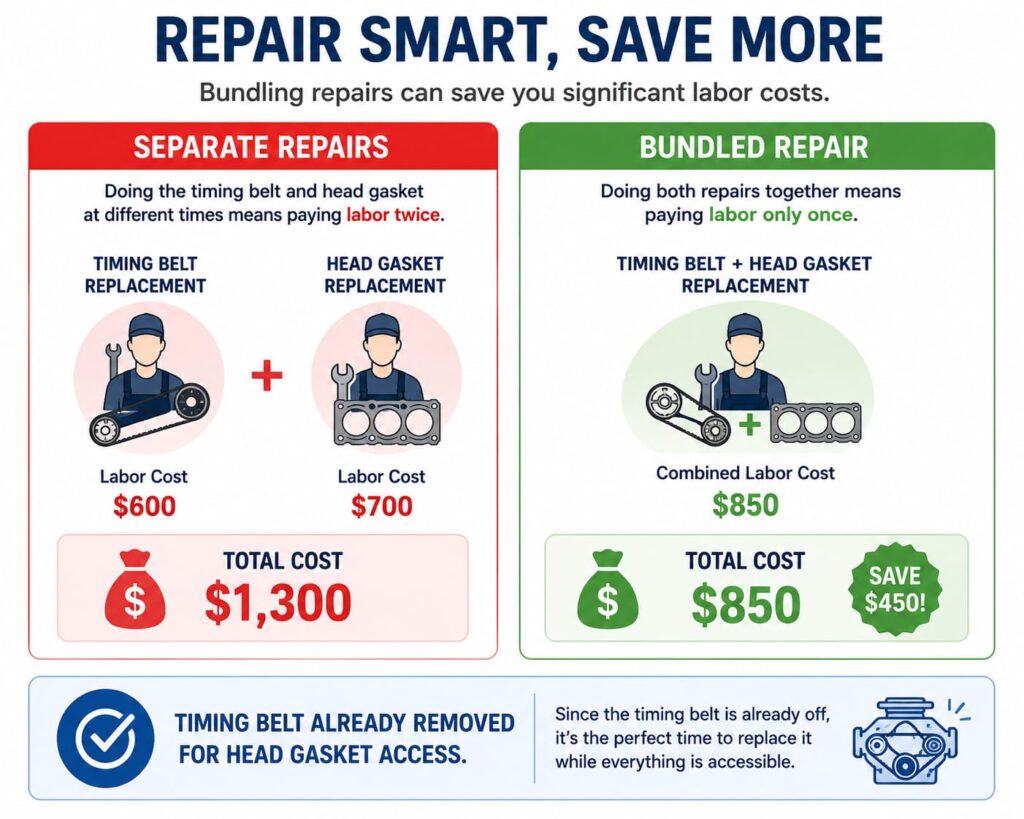
Here’s something worth knowing before you approve a repair: on most Subaru boxer engines, the timing belt has to come off to reach the cylinder heads anyway. Because of this, most experienced independent shops will recommend replacing the timing belt, tensioner, and water pump in the same visit, even if they’re not due yet on mileage alone.
It costs more upfront, but it saves you from paying for the same labor-intensive teardown a second time within a few years, since these components wear out around similar mileage intervals regardless.
Is It Worth Fixing on an Older Subaru?
Often, yes. Subarus have a reputation for high mileage longevity once past this specific weak point, and many owners find the investment worthwhile if the rest of the car is in good shape. As with any head gasket decision, weigh the total repair cost (including the timing belt service, if you choose to bundle it) against the car’s realistic resale value before committing.
Frequently Asked Questions
Do all Subarus have this head gasket problem?
No. It’s most strongly associated with older EJ-series engines. Newer Subaru models with FB-series engines are considerably less prone to this specific failure.
Should I replace the timing belt at the same time?
In most cases, yes — since the belt has to come off anyway to access the heads, bundling this maintenance saves you a second round of labor costs down the road.
Is a Subaru head gasket repair more expensive than other brands?
Generally yes, due to the boxer engine’s dual cylinder heads and tighter access, which increases labor time compared to a simple inline-4 engine repair.
[LINK: How to Test for a Blown Head Gasket -> confirm the diagnosis before repairing]