
Head gasket sealer is one of those products that gets recommended everywhere online, usually right after someone mentions white smoke or a coolant leak. It can genuinely work in the right situation — but it’s not magic, and using it on the wrong kind of failure just delays a repair while your engine keeps running hot. Here’s how to actually use it correctly, and just as importantly, how to know when it’s not going to save you.
What Head Gasket Sealer Actually Does (and Doesn’t Do)
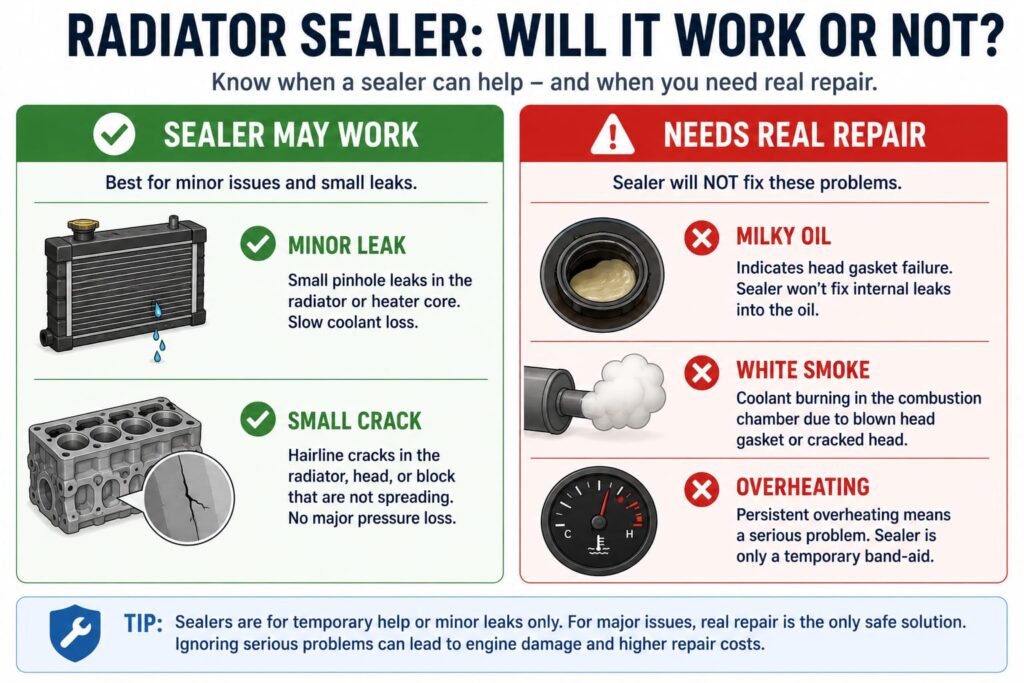
Head gasket sealer works by circulating through your cooling system and, when it reaches a small crack or leak point, reacting with heat and air exposure to harden and plug the gap. It’s genuinely effective for small, hairline leaks — particularly ones where combustion gas or coolant is escaping through a minor breach rather than a fully failed gasket.
What it does not do is fix a warped cylinder head, repair a fully separated gasket, or reverse damage that’s already been done to your engine. Treat it as a targeted patch for a specific type of small leak, not a general-purpose fix for every head gasket symptom.
Step-by-Step: How to Use Head Gasket Sealer
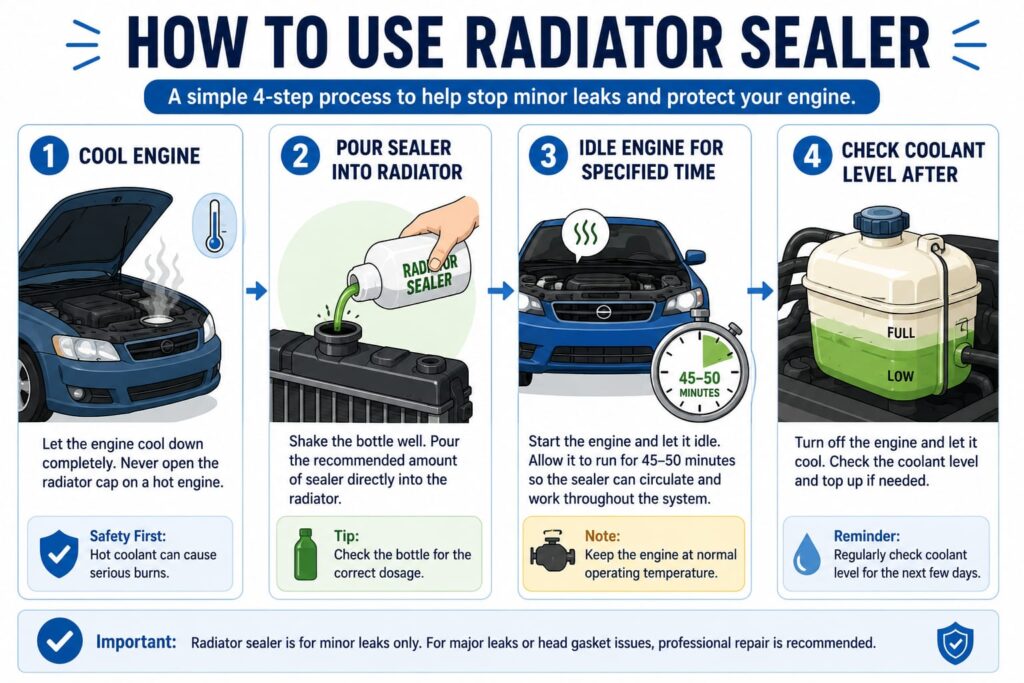
- Let the engine cool completely before starting — most sealers require the coolant to be below a certain temperature to be added safely.
- Check your coolant level and top it off if needed, since most sealers work best in a properly filled system.
- Add the sealer directly to the radiator or coolant reservoir according to the product’s specific instructions — dosage varies by brand and cooling system size.
- Start the engine and let it idle, typically for the time specified on the product (often 20-50 minutes), allowing the sealer to circulate and reach the leak point.
- Avoid revving the engine or driving during this process unless the instructions say otherwise — steady idle heat is usually what activates the sealant.
- Check your coolant level again after the process and monitor for a few days of normal driving to confirm the leak has actually stopped.
Is K-Seal Any Different From Other Sealers?
K-Seal is one of the most searched and recognized head gasket sealer brands, largely because it markets itself as a permanent fix rather than a temporary patch, and because it doesn’t require draining your existing coolant first. Whether it lives up to “permanent” in every case is a fair question — it depends heavily on the size and type of leak, same as any sealer product.
[LINK: K-Seal Head Gasket -> Full Guide]
When Sealer Won’t Work — Signs You Need a Real Repair
- Milky, foamy engine oil — indicating coolant is already mixing with oil, not just leaking externally
- Thick, continuous white exhaust smoke after the engine reaches operating temperature
- Consistent overheating that returns within days of using a sealer
- A confirmed diagnosis from a compression test or leak-down test showing a significant, not minor, gasket failure
If you’re seeing any of these, sealer is likely to buy you a small amount of time at best, not solve the underlying problem.
What a Permanent Repair Actually Involves
When sealer isn’t enough, the real fix means removing the cylinder head, inspecting it for warping, and properly resurfacing it if needed before installing a new gasket and reassembling the engine correctly. This is a more involved process than most DIYers expect, and it depends on a few specific tools and steps.
[LINK: Cylinder Head Resurfacing Machine -> Full Guide]
[LINK: Cylinder Head Resurfacing Stone -> Full Guide]
[LINK: How to Install Cylinder Heads -> Full Guide]
Frequently Asked Questions
Is head gasket sealer a permanent fix?
Sometimes, for small hairline leaks — but it’s not reliable for a fully failed gasket or a warped cylinder head. Think of it as a targeted patch, not a guaranteed permanent solution.
Can head gasket sealer damage my engine?
Used correctly and in the right situation, it’s generally safe. Overusing it, adding too much, or relying on it repeatedly instead of fixing the root cause can lead to buildup in the cooling system over time.
How long does head gasket sealer last?
This varies widely depending on the size of the original leak. Some seals hold for the life of the car; others last only weeks before the underlying problem resurfaces.
Related Guides in This Series
[LINK: Cylinder Head Resurfacing Machine -> Full Guide]
[LINK: K-Seal Head Gasket -> Full Guide]
[LINK: How to Install Cylinder Heads -> Full Guide]
[LINK: Cylinder Head Resurfacing Stone -> Full Guide]
Conclusion
Head gasket sealer has a real, useful place — for small leaks caught early, it can genuinely save you a much larger repair bill. But it’s not a substitute for proper diagnosis, and leaning on it when the damage is more serious just delays the inevitable while your engine takes on more wear. Use the guides above to understand the full repair process if sealer isn’t holding, or if your mechanic has already told you a proper cylinder head repair is needed.