Cylinder Head Resurfacing Machine: What It Does and When You Need One
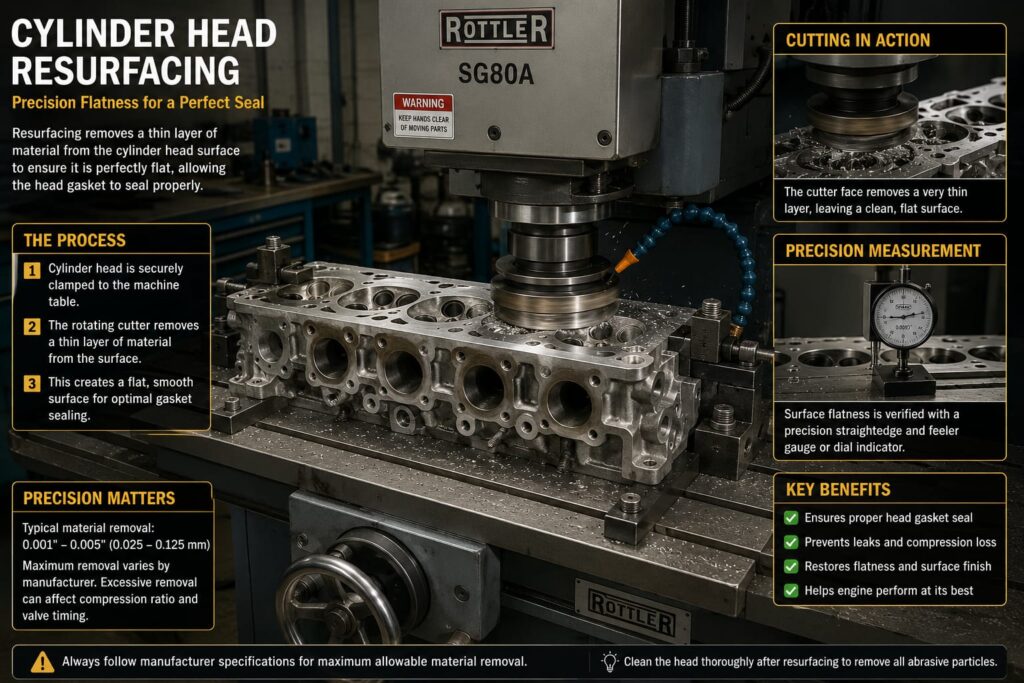
When a cylinder head warps from overheating, the fix isn’t as simple as bolting on a new gasket and hoping for the best. The head’s mating surface — the flat area that seals against the engine block — has to be machined back to true flatness first, or even a brand-new gasket will fail again almost immediately. That’s the job of a cylinder head resurfacing machine.
This post is part of our complete guide on using head gasket sealer and understanding proper installation — see the full breakdown below.
complete head gasket installation guide
What a Cylinder Head Resurfacing Machine Actually Does
A resurfacing machine removes a thin, precise layer of material from the cylinder head’s gasket-mating surface, correcting warping caused by heat cycles or a prior overheating event. The goal is to bring the surface back to dead flat within the manufacturer’s tolerance, so the new head gasket can seal properly against both the head and the block. Without this step, even a perfect gasket installation on a warped head is likely to leak again within a short time.
Types of Resurfacing Machines
- Rotary broach / mill-style machines — use a rotating cutting head to shave the surface flat, common in professional machine shops
- Belt-style surfacing machines — use an abrasive belt for a finer, more controlled finish, often preferred for aluminum heads
- Manual surfacing plates and hand tools — a lower-cost, more labor-intensive option for very minor warping, more common among serious DIYers than professional shops
Milling vs Grinding vs Decking — What’s the Difference?
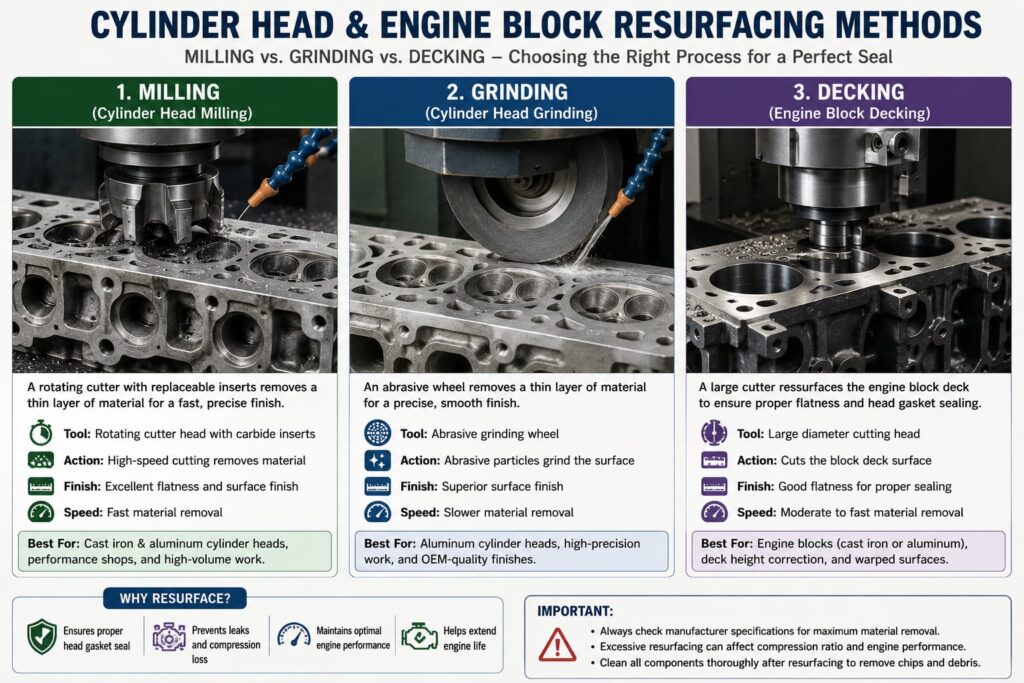
These terms get used loosely, but they refer to related but distinct processes. Milling uses a rotating cutter to remove material in a controlled pass. Grinding uses an abrasive wheel for a finer surface finish, often the preferred method for aluminum cylinder heads since it generates less heat than milling. Decking specifically refers to resurfacing the engine block itself (the deck surface) rather than the head — both surfaces need to be flat for a proper seal, so decking sometimes accompanies head resurfacing on a full rebuild.
Should You Buy One or Send the Head to a Machine Shop?
For most car owners, and even most home mechanics, sending the cylinder head to a professional machine shop makes more financial sense than buying a resurfacing machine outright. These machines represent a meaningful investment and require calibration and experience to use correctly — a poorly resurfaced head can be worse than a slightly warped one. Machine shops that do this work regularly typically charge a reasonable flat fee per head, which is almost always less than the cost of the equipment itself for a one-time or occasional repair.
Buying your own equipment starts to make sense only if you’re a professional shop doing this work repeatedly, or a serious hobbyist working on multiple engine builds.
What to Look For When Buying a Resurfacing Machine
- Whether it’s rated for both aluminum and cast-iron heads, since aluminum requires more careful heat management
- The maximum head length and width it can accommodate for your specific engines
- Availability of replacement cutting tools or belts, since these wear out with regular use
- Reviews or documented accuracy tolerances, since precision is the entire point of the machine
| Process | Best Used For |
| Milling | General resurfacing, cast-iron heads |
| Grinding | Aluminum heads, finer finish |
| Decking | Engine block surface, full rebuilds |
Frequently Asked Questions
How much material can be removed before a cylinder head is unusable?
Manufacturers specify a maximum amount of material that can be safely removed, usually a small fraction of a millimeter to a few millimeters depending on the engine. Removing too much can affect compression ratio and valve clearance, so a machine shop should always check this before resurfacing.
Can I resurface a cylinder head myself without a machine?
For very minor warping, some DIYers use a flat surfacing plate with abrasive paper, but this method is slow, less precise, and not recommended for anything beyond minimal warping.
Does resurfacing affect engine performance?
Removing material lowers the combustion chamber volume slightly, which can marginally raise compression. For minor resurfacing this effect is negligible, but a machine shop can advise if a large amount of material needs to be removed.
[LINK: How to Install Cylinder Heads -> Related Post]
“back to the full installation guide”
[LINK: Head Replacement Cost -> Related Post]