
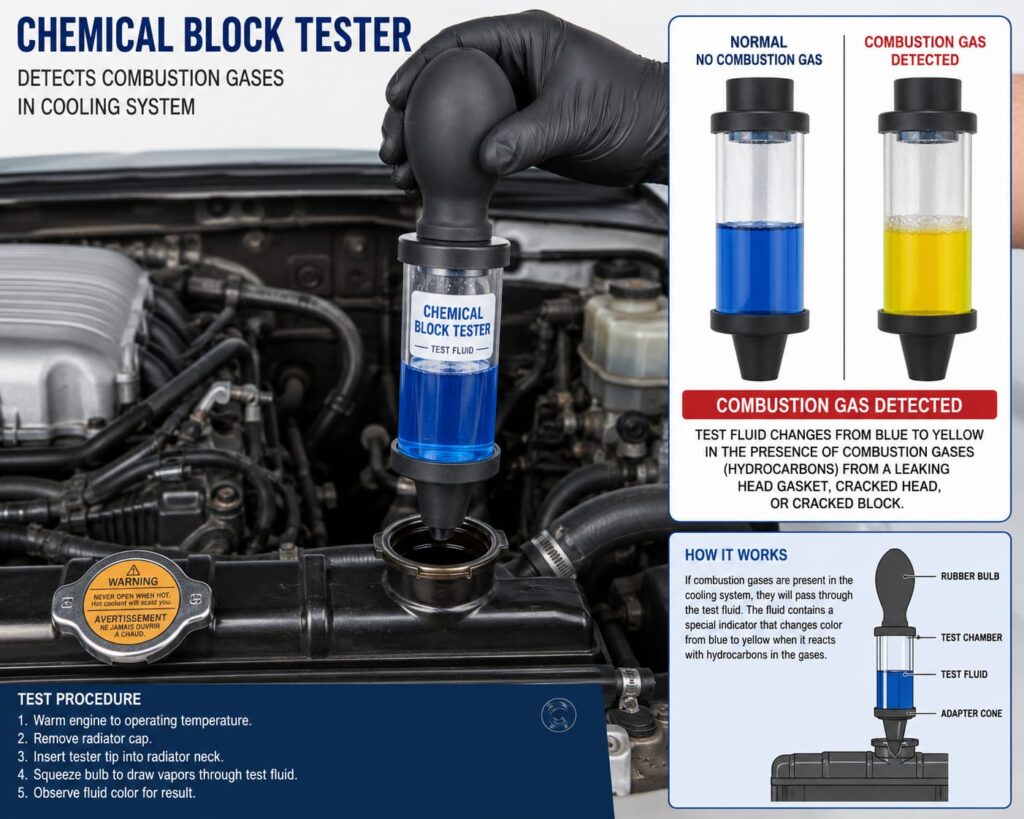
A chemical block test, also called a combustion leak detector test, identifies whether combustion gases are entering your cooling system—a definitive sign of a blown head gasket. This affordable, non-invasive test uses a special chemical indicator that changes color when exposed to combustion byproducts in the coolant.
Why Combustion Gases Indicate Head Gasket Failure
A healthy engine keeps combustion sealed inside the cylinders. When the head gasket fails, high-pressure combustion gases escape into the cooling passages. These gases bubble up through the coolant, carrying distinctive chemical markers. A block tester detects these markers, providing chemical-level proof of gasket failure.
Tools and Materials Needed
• Chemical Block Tester Kit ($10-25)
• Coolant Reservoir (already on your engine)
• Small Container or Cup (to collect coolant sample)
• Indicator Fluid from Kit (included in test kit)
• Timer or Watch (to track color change time)
• Gloves (optional, for protection)
• Cool Engine (must be at room temperature)
How the Chemical Block Tester Works
The kit contains a small chemical capsule or liquid that reacts specifically to combustion gases (primarily nitrogen oxide and other byproducts). When coolant containing these gases contacts the chemical, the color changes from blue to yellow—a clear, undeniable indicator of combustion gas presence.
Step-by-Step Procedure
Step 1: Cool Your Engine Completely
Wait at least 1-2 hours after driving to ensure the engine and cooling system are at room temperature. Never work with a hot coolant system—pressure can build and cause burns.
Step 2: Locate Your Radiator Cap or Coolant Reservoir
Open your hood and find the radiator cap or coolant expansion tank. Most modern vehicles have a plastic reservoir with MIN and MAX marks.
Step 3: Collect a Coolant Sample
Using a small cup or container, carefully collect a sample of coolant from the radiator or expansion tank. Use approximately 4-6 ounces—just enough to submerge the indicator.
Step 4: Insert the Chemical Indicator
Place the chemical indicator (usually a small float or capsule) into your coolant sample cup. Do not let it touch the bottom directly if possible. The indicator will float or suspend in the coolant.
Step 5: Observe the Color
Watch the indicator closely over the next 15-30 seconds. Most kits require observation time. The chemical will remain blue if no combustion gases are present. If combustion gases are in the coolant, the indicator will change to yellow or yellow-green.
Step 6: Record Your Result
Note whether the indicator changed color and how quickly. A rapid color change indicates a strong presence of combustion gases.
Interpreting Test Results
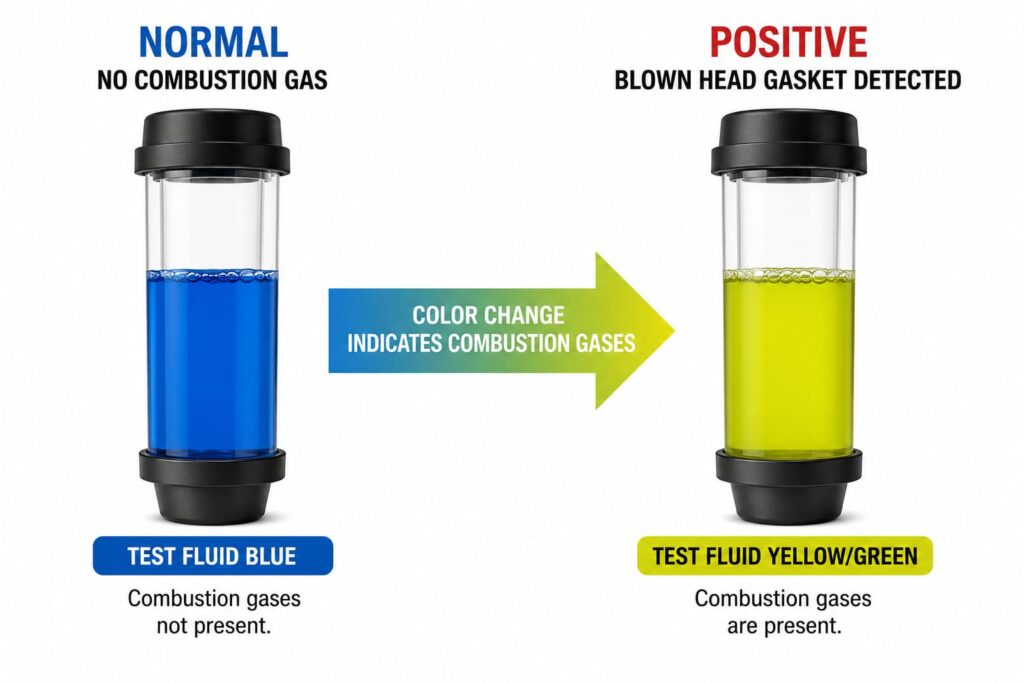
Blue Color (No Change): Combustion gases are not present. Head gasket is likely healthy.
Gradual Yellow Change (10-30 seconds): Mild combustion gas presence. Possible early-stage gasket failure.
Rapid Yellow Change (under 10 seconds): Strong combustion gas presence. Head gasket failure is confirmed.
Deep Yellow or Green: Severe combustion gas contamination. Significant head gasket leak.
Advantages of Chemical Block Testing
✅ Extremely Affordable: $10-25 for the kit
✅ Quick Results: Color change happens in seconds to minutes
✅ Clear Visual Indication: Blue to yellow is unmistakable
✅ Safe and Non-Invasive: No mechanical work required
✅ Reusable Kit: Can test multiple times
✅ No Special Skills: Literally anyone can perform this test
Limitations of This Test
❌ Less Precise: Doesn’t measure severity or identify leak location
❌ Older Vehicles May Give False Positives: Some older coolants react differently
❌ Timing Dependent: Must watch carefully during the test window
❌ Doesn’t Differentiate: Can’t distinguish between gasket failure and valve leaks
❌ Small Sample Size: One test with limited coolant may not catch intermittent leaks
Cost and Time Estimate
Chemical Kit Cost: $10-25
Time Required: 5-10 minutes
Overall Cost: $10-25 (one-time or multiple tests)
Popular Chemical Block Test Brands
• Lisle Combustion Leak Detector ($15-20)
• OTC Combustion Leak Detector ($12-18)
• Universal Aftermarket Kits ($10-15)
FAQ
Q: Can I reuse the same chemical indicator?
A: Most kits include multiple indicators. Check your kit instructions. Some are single-use; others can be reused after being reset.
Q: What if my engine is still warm?
A: Wait until it cools. A warm coolant system may produce inaccurate results and risks burns.
Q: Does a color change definitely mean head gasket failure?
A: A color change strongly indicates combustion gas entry. While this usually means head gasket failure, it can occasionally be caused by crack in the block or other internal engine damage. Combine with other tests for confirmation.
Conclusion
The chemical block test is an excellent starting point for head gasket diagnosis. At $10-25 and taking just 5-10 minutes, it provides quick evidence without risk. While it shouldn’t be your only diagnostic, combined with oil inspection and pressure testing, it builds a compelling case for head gasket failure. Most DIYers consider this test essential in their diagnostic toolkit.
Want to combine this test with others? See the [PILLAR LINK: How to Test a Blown Head Gasket – Complete Guide] for a complete diagnostic strategy.