
Not every head gasket failure stops at the gasket itself. Sometimes the underlying cause — often a period of overheating before the problem was caught — damages the cylinder head, turning a moderate repair into a considerably larger one. Understanding when you’re paying for a simple gasket swap versus a full cylinder head replacement helps make sense of a quote that might otherwise seem unreasonably high.
This post is part of our complete guide on head gasket repair costs and timelines — see the full breakdown for all repair scenarios below.
Gasket-Only Repair vs Full Head Replacement — Know the Difference
A gasket-only repair means the cylinder head itself is in good condition — flat, uncracked, structurally sound — and simply needs a new gasket seated between it and the engine block. A full head replacement, or a resurfacing job, means the head has warped from heat, developed a crack, or suffered damaged valve seats, and needs machine work or outright replacement before the engine can go back together safely.
Signs You May Need More Than a Gasket
- The engine overheated significantly before the gasket failure was noticed or diagnosed
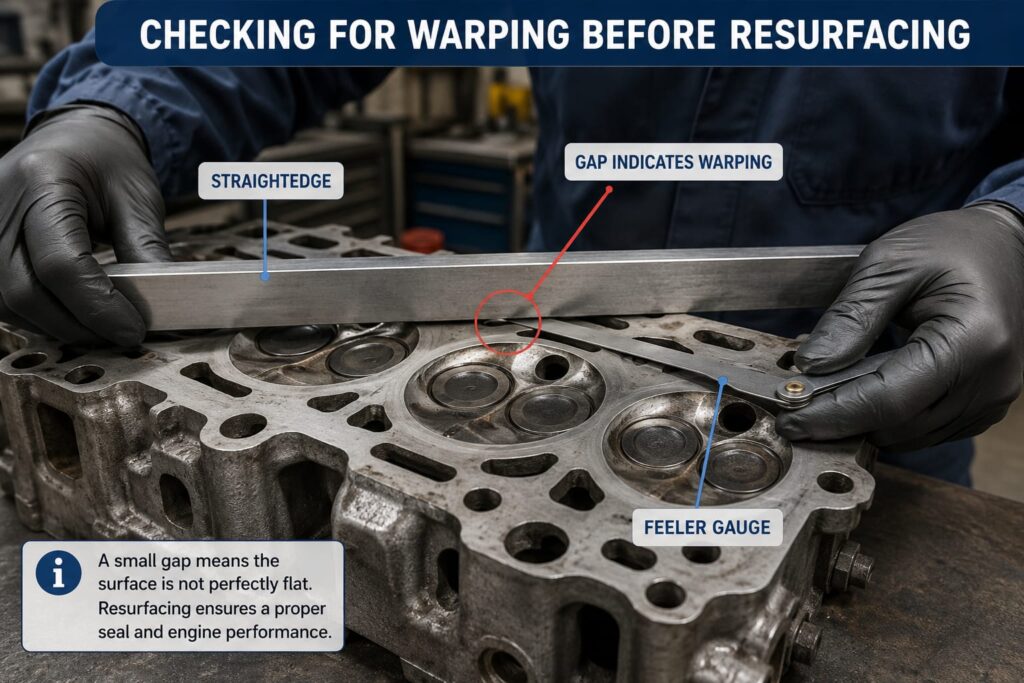
- A straightedge and feeler gauge inspection reveals visible warping across the head’s mating surface
- Compression testing shows uneven readings across multiple cylinders, not just one isolated cylinder
- There’s visible cracking around the combustion chamber or coolant passages during inspection
What Drives the Cost Up
- Machine shop resurfacing fees, which are usually billed separately from the main repair labor
- Sourcing a replacement head if resurfacing isn’t within tolerance (new OEM vs aftermarket vs remanufactured pricing varies significantly)
- Additional valve train components that often need replacing once the head is already disassembled
- Labor to remove and reinstall components a second time, if damage is discovered mid-repair rather than upfront
New, Remanufactured, or Used — Which Option Makes Sense?
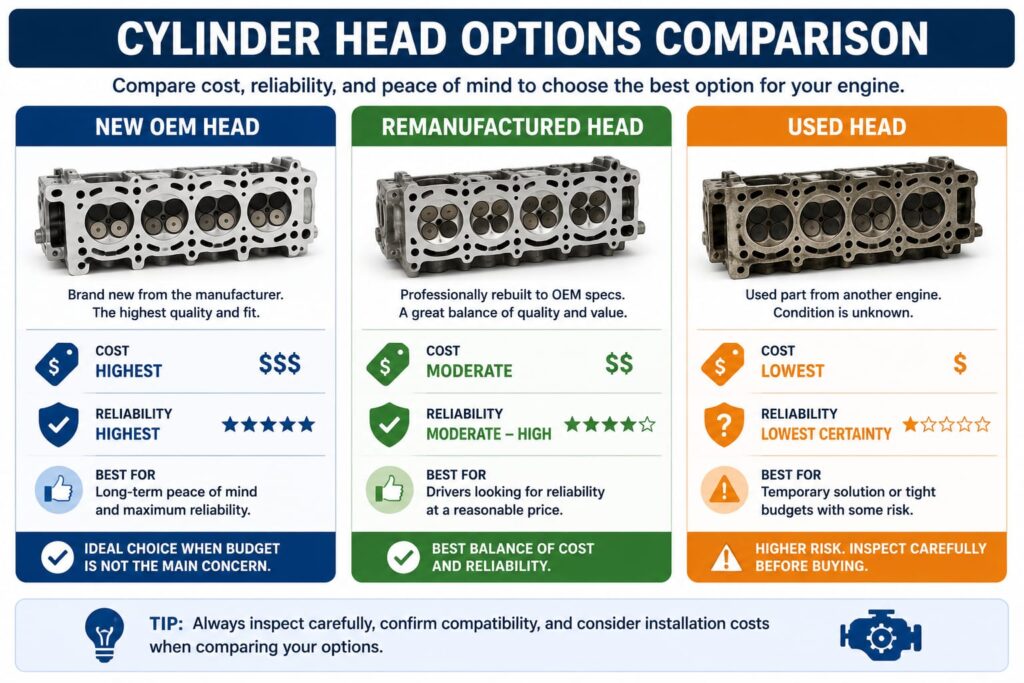
If a full head replacement is needed, you typically have three options. A new OEM head is the most expensive but comes with the most certainty. A remanufactured head — rebuilt to factory specifications by a specialist — usually offers a solid middle ground on cost and reliability. A used head, pulled from a salvage vehicle, is the cheapest option but carries the most uncertainty, since you’re relying on the seller’s inspection rather than a factory rebuild process.
| Option | Trade-Off |
| New OEM Head | Highest cost, most certainty |
| Remanufactured Head | Moderate cost, factory-spec rebuild |
| Used Head | Lowest cost, least certainty |
How to Avoid Paying for This Unnecessarily
Ask your mechanic to check the cylinder head for warping before finalizing the repair price, rather than after the job has already started. A straightedge and feeler gauge check is quick and inexpensive, and it prevents the unpleasant surprise of a mid-repair phone call telling you the job just became significantly more expensive than the original estimate.
Frequently Asked Questions
Can a warped head be fixed without replacing it?
Often yes — machine shops can resurface a warped head within certain tolerances. If the warping is too severe, or the head is cracked, replacement becomes necessary instead.
Is a used cylinder head a safe option?
It can be, if it comes from a reputable salvage source and is inspected properly, but it carries more uncertainty than a new or professionally remanufactured head.
Why did my mechanic say the head needs replacing instead of just resurfacing?
If the warping exceeds the manufacturer’s tolerance for resurfacing, or if there’s a crack, resurfacing isn’t a safe option and replacement becomes necessary to avoid a repeat failure.
[LINK: How to Test for a Blown Head Gasket -> confirm the diagnosis before repairing]