
Diesel engines don’t fail the same way gasoline engines do, and head gaskets are a good example of that difference. If you’re dealing with a diesel head gasket problem — whether in a pickup truck, a diesel car, or commercial equipment — it’s worth understanding what makes these engines different before choosing a repair shop.
This post is part of our complete guide on head gasket repair costs and timelines — see the full breakdown for all repair scenarios below.
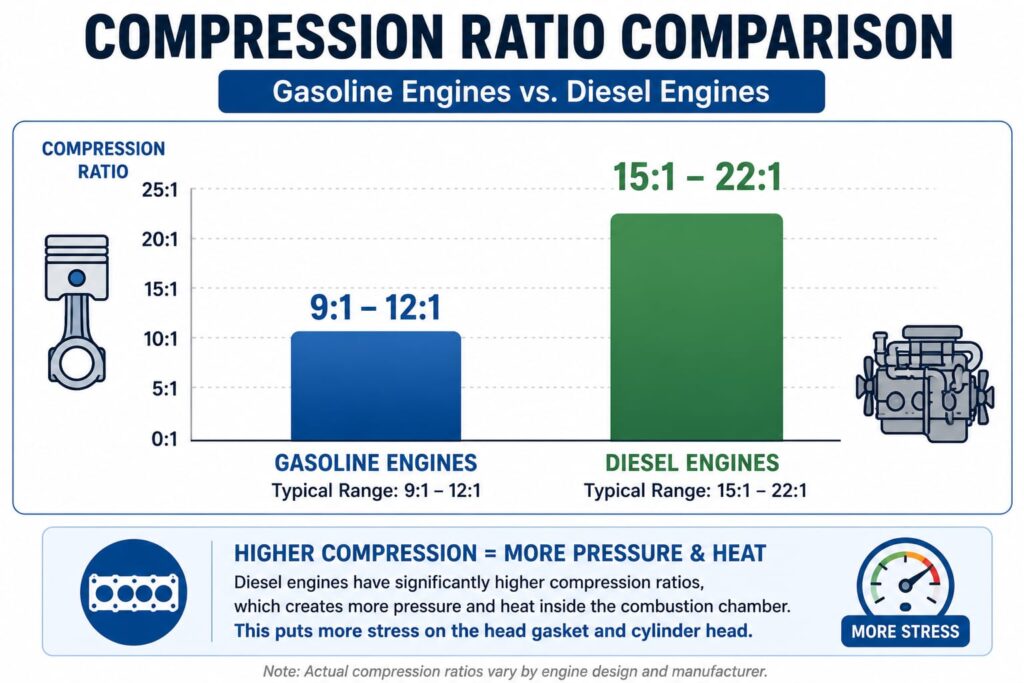
Why Diesel Engines Are Harder on Head Gaskets
Diesel engines rely on compression ignition rather than a spark plug, meaning they run at much higher compression ratios than gasoline engines — often two to three times higher. That extra pressure stresses the head gasket every single combustion cycle, which is exactly why diesel-specific gaskets are built heavier and reinforced differently than gasoline equivalents. Using the wrong gasket type, or a gasket not rated for diesel-level pressure, is one of the more common causes of early failure.
Turbocharging, which is standard on nearly all modern diesel engines, adds further cylinder pressure on top of the already-high compression, compounding the stress the gasket has to withstand over its lifetime.
Common Causes of Diesel Head Gasket Failure
- Overheating from a failed cooling system component (radiator, thermostat, water pump)
- Using a gasket not specifically rated for diesel compression and cylinder pressure
- Overboosting from aftermarket tuning that exceeds factory-rated pressure limits
- Normal age and heat-cycle fatigue, more pronounced on higher-mileage diesel engines
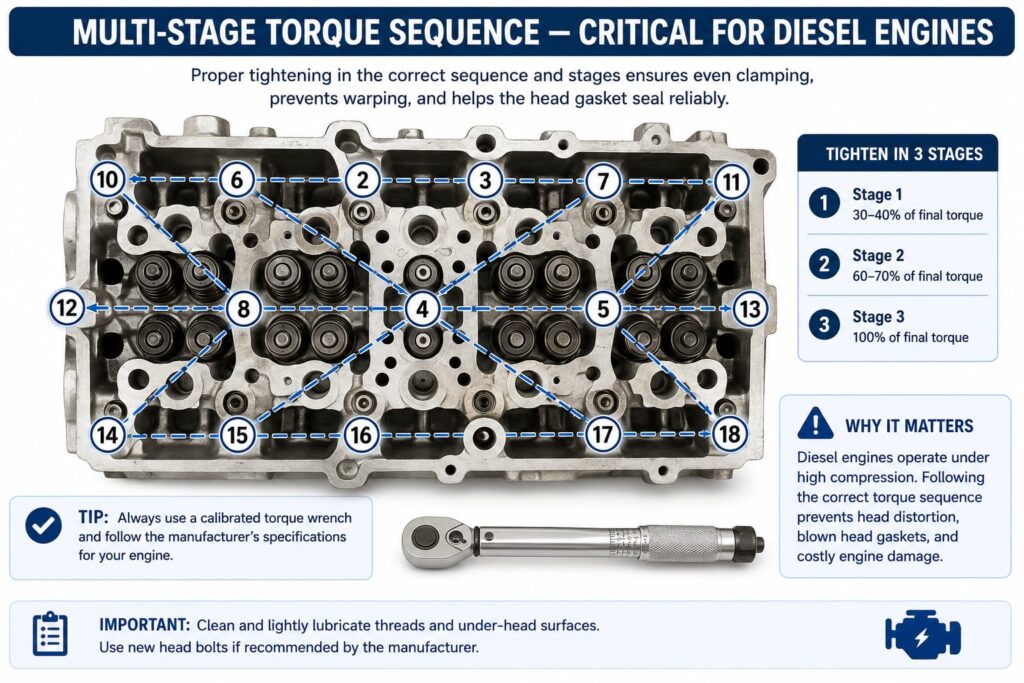
What Makes the Repair Itself Different
Diesel cylinder heads are often larger and heavier than gasoline counterparts, and torque specifications for head bolts tend to be higher and more precise, given the pressures involved. The reassembly process typically involves a specific, multi-stage torque sequence — getting this wrong is one of the fastest ways to cause an immediate repeat failure on a diesel engine, more so than on a comparable gasoline engine.
What to Look For in a Repair Shop
Not every mechanic who’s comfortable with gasoline engines has equal experience with diesel-specific torque sequences, gasket types, and cooling system quirks. When getting quotes, it’s entirely reasonable to ask directly whether the shop has specific diesel engine experience, rather than general engine repair experience alone.
Cost Considerations for Diesel Repairs
Diesel head gasket repairs often run higher than an equivalent gasoline repair. Part of this comes from the heavier-duty parts involved, and part comes from the fact that diesel engines are frequently housed in trucks with larger, more labor-intensive engine bays. If your vehicle has been tuned for extra power, it’s worth factoring in a return to stock boost levels as part of preventing a repeat failure, since sustained overboosting is a common root cause.
Preventing a Repeat Failure
- Keep the cooling system well maintained — diesel engines are less forgiving of overheating than gas engines
- Avoid sustained overboosting beyond factory-rated limits if the vehicle is tuned
- Confirm the replacement gasket is rated specifically for diesel applications, not a generic universal gasket
- Have the head bolts torqued in the correct multi-stage sequence specified by the manufacturer
Frequently Asked Questions
Do diesel head gaskets fail more often than gas engines?
Not necessarily more often, but when they do fail, the higher compression and cylinder pressure involved can make the failure more severe and the repair more involved.
Can I use a gasoline engine head gasket on a diesel?
No. Diesel engines require gaskets specifically rated for their compression and cylinder pressure — using the wrong gasket type is a common and preventable cause of repeat failure.
Does tuning my diesel truck increase the risk of head gasket failure?
Yes, sustained overboosting beyond factory-rated pressure limits adds extra stress to the head gasket and is a recognized risk factor for tuned diesel engines.
[LINK: How to Test for a Blown Head Gasket -> confirm the diagnosis before repairing]