
A compression test measures the air pressure your engine’s cylinders generate during the compression stroke. A blown head gasket allows combustion gases to escape, resulting in lower compression in the affected cylinder. By comparing pressures across all cylinders, you can identify gasket failure and determine which cylinder is compromised.
Why Compression Indicates Head Gasket Problems
Healthy engines produce consistent compression across all cylinders—typically 150-160 PSI for most vehicles. A blown head gasket creates a leak path where pressurized air escapes from the combustion chamber into the cooling system or crankcase. The affected cylinder(s) read 20-40 PSI lower than healthy cylinders. This differential is the diagnostic clue.
Tools and Materials Needed
• Compression Tester Kit ($20-50)
• Socket Set (to remove spark plugs)
• Spark Plug Removal Tool or Socket (typically 5/8 inch)
• Dry Socket (for spark plug storage)
• Notebook (to record readings)
• Work Gloves and Safety Glasses
• Battery in Good Condition (for starter motor power)
Step-by-Step Procedure
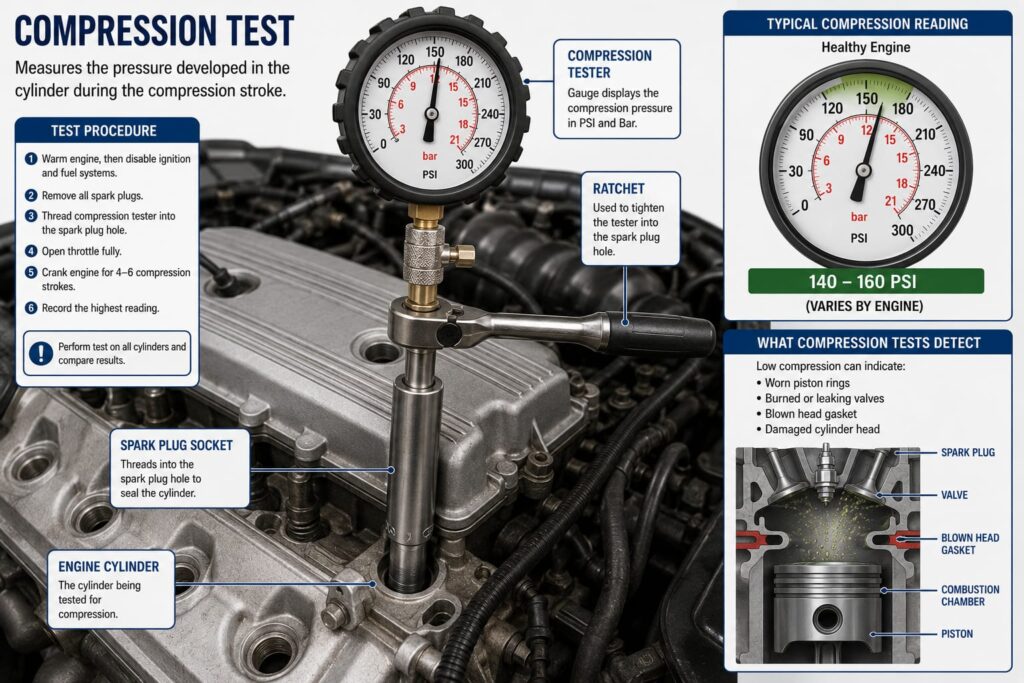
Step 1: Prepare the Engine
Park on level ground and allow the engine to cool to room temperature. A warm engine reads artificially high. Disconnect the negative battery terminal, wait 5 minutes, then reconnect—this resets the fuel injectors.
Step 2: Disable the Ignition
Most compression testers include a switch to disable the ignition. This prevents spark plugs from firing during testing, allowing pure compression measurement without combustion confounding results.
Step 3: Remove All Spark Plugs
Using your socket set, carefully remove all spark plugs. Place them in order (Cylinder 1, 2, 3, etc.) in a dry socket or clean container. This prevents mixing them up and damaging threads.
Step 4: Install Compression Gauge in Cylinder 1
Screw the compression tester hose into the spark plug hole of Cylinder 1 until it seats firmly. Don’t over-tighten; you just need a secure seal.
Step 5: Crank the Engine
With the ignition disabled and compression gauge installed, turn the ignition key to START and crank the engine for 3-5 seconds. The gauge reads maximum pressure reached. Record the number.
Step 6: Release and Repeat
Push the release button on the gauge to vent pressure. Move to Cylinder 2, install the gauge, crank, record, and repeat for all cylinders (typically 4, 6, or 8 depending on engine).
Step 7: Compare Readings
Healthy cylinders should read within 10 PSI of each other. Any cylinder reading 20+ PSI lower than others indicates a leak. Reinstall spark plugs in their original positions and reconnect the battery.
Interpreting Compression Results
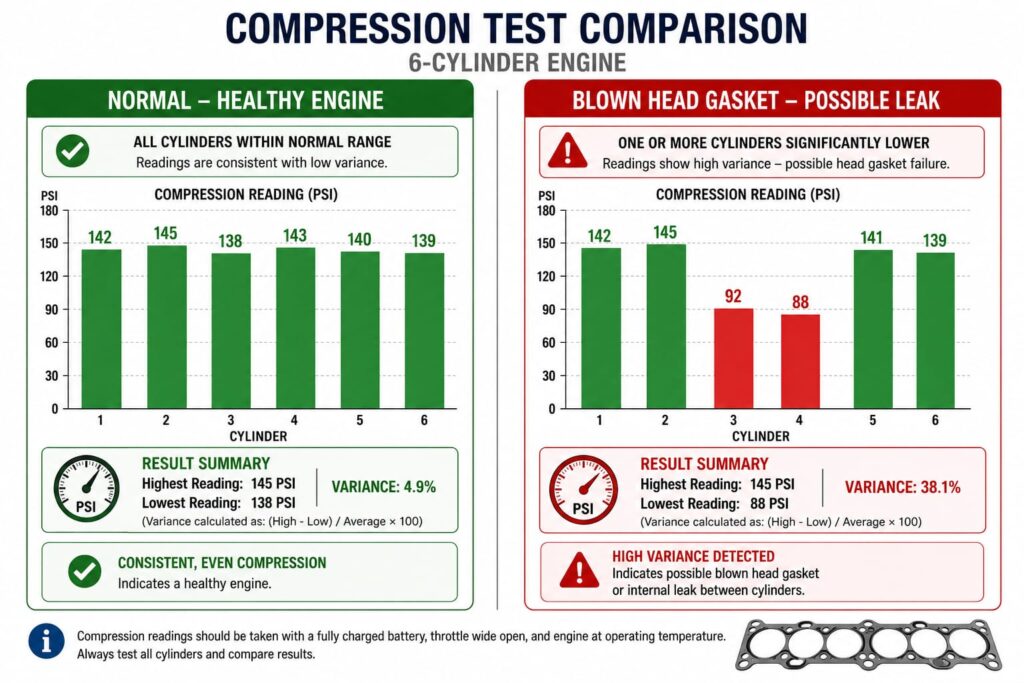
All Cylinders 150-160 PSI: Normal. Head gasket is likely healthy.
All Cylinders Low (80-100 PSI): General engine wear or timing issues; not necessarily head gasket.
One or Two Cylinders 20+ PSI Lower: Possible head gasket leak in that cylinder.
Multiple Cylinders Significantly Low: Severe head gasket failure or multiple engine issues.
The Wet Test (Advanced Check)
If one cylinder reads low, perform the “wet test”: add a small amount of oil into the spark plug hole, reinstall the gauge, and crank again. If compression jumps 10+ PSI, the low reading was from worn piston rings, not head gasket. If pressure stays low, head gasket failure is likely.
Advantages of Compression Testing
✅ Affordable: Compression testers cost $20-50
✅ Identifies Specific Cylinder: Shows exactly which cylinder is affected
✅ Differentiates Issues: Distinguishes head gasket from ring wear (wet test)
✅ DIY Friendly: No special training required
✅ Definitive: Provides concrete numerical evidence
Limitations of This Test
❌ Requires Spark Plug Removal: Messier than other tests
❌ Takes Time: Must test each cylinder individually
❌ Interpretation Challenges: Worn rings mimic head gasket failure
❌ Doesn’t Show Extent: Indicates problem location, not severity
Cost and Time Estimate
Compression Tester Purchase: $20-50 (reusable)
Compression Tester Rental: $5-15 per day
Time Required: 30-45 minutes for all cylinders
FAQ
Q: What if my compression numbers are inconsistent between test runs?
A: Repeat the test, ensure proper gauge seating, and verify battery charge. Weak starter motor reduces pressure readings.
Q: Can low compression be caused by something other than head gasket?
A: Yes. Worn piston rings, valve timing issues, and carbon buildup all lower compression. Use the wet test to differentiate.
Conclusion
The compression test is the DIY mechanic’s best friend for head gasket diagnosis. It’s affordable, provides specific data, and differentiates between multiple engine issues. Combined with oil inspection and pressure testing, a compression test creates an undeniable case for head gasket failure.
Ready for the ultimate test? Explore the [PILLAR LINK: How to Test a Blown Head Gasket – Complete Guide] including the professional leak-down test.