
If you’ve got a slow coolant leak and someone’s suggested pouring in a bottle of Waterlock before you spend money on a real repair, it’s worth understanding what this product actually does inside your cooling system — and why, in some situations, it can make a head gasket problem worse instead of better.
What Is Waterlock, and How Is It Supposed to Work?
Waterlock is a chemical stop-leak additive poured directly into the cooling system. Like most products in this category, it’s designed to travel through the coolant and seal small leaks from the inside — typically by reacting with air at the leak point and hardening into a plug, or by carrying fine particulates that lodge themselves into cracks, pinholes, or gaps in gaskets and hoses.
In theory, this sounds like an easy fix: no disassembly, no labor cost, just pour it in and drive. In practice, it’s a patch aimed at very specific, very minor leaks — not a substitute for diagnosing what’s actually failing.
Why Waterlock Can Contribute to a Head Gasket Blowing
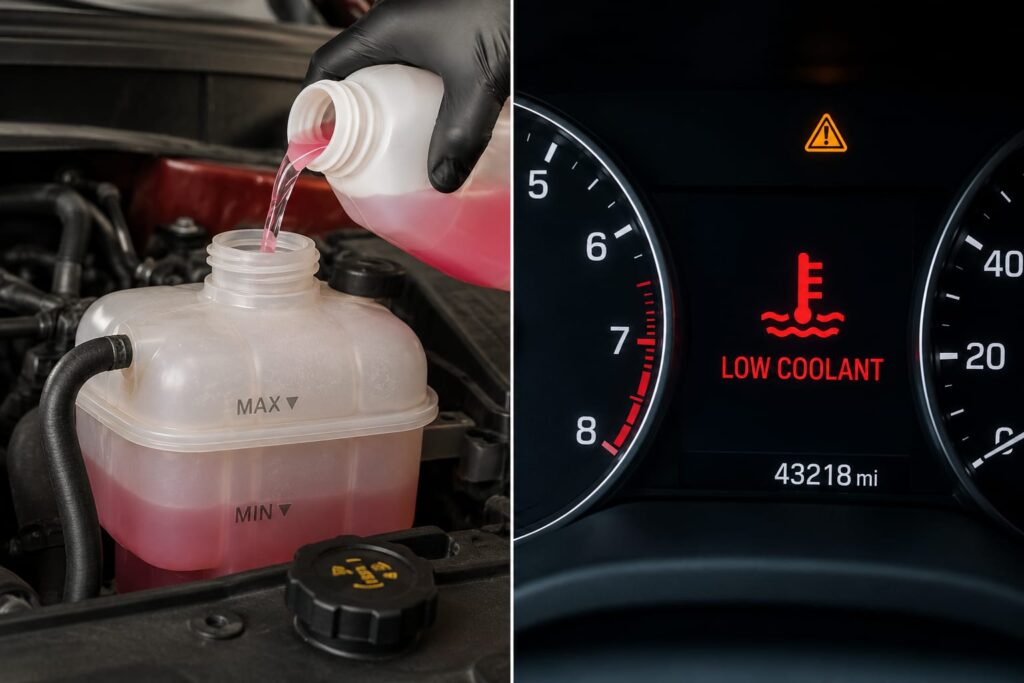
The concern isn’t that Waterlock directly damages a head gasket the moment it’s poured in. The risk comes from what happens afterward, and it usually plays out in one of a few ways:
- It seals the wrong thing. If the real problem is already a small head gasket leak, the additive can temporarily mask the symptom (slowing coolant loss) without addressing the actual failing seal — so you keep driving on a gasket that’s already compromised, unaware it’s getting worse.
- It can clog narrow passages. The same particulates designed to plug a pinhole leak can also settle in coolant passages, radiator channels, or the narrow galleries inside the engine block and head. Reduced coolant flow means the engine runs hotter than it should, and chronic overheating is one of the most common root causes of head gasket failure to begin with.
- It can interact badly with the gasket’s own sealing material. Modern MLS gaskets rely on a thin elastomer coating to hold their seal. Some chemical additives aren’t fully compatible with that coating, and repeated or heavy use has been linked to degrading the seal rather than preserving it.
- It encourages delay. Because it can mask symptoms temporarily, a stop-leak product often buys a driver a few more days or weeks of “seems fine” driving — time during which a minor gasket leak can progress into a major one.
None of this means Waterlock is inherently dangerous in every situation. It’s the same story as most stop-leak products: fine as a genuine short-term measure for a known, minor, non-gasket leak (like a small radiator pinhole), but risky when it’s used as a way to avoid diagnosing what’s actually wrong.
Can a Head Gasket Blow Without Overheating?
Yes — this is a common point of confusion. A head gasket can fail gradually, with overheating showing up late or not at all if the leak is small and mostly affects oil or compression rather than coolant flow. That’s part of why a car can sometimes keep running “fine” for a while even with a gasket that’s already blown, which is exactly the scenario where a product like Waterlock can create false reassurance — the temperature gauge looks normal, so the problem feels solved, even though it isn’t.
Signs the Leak Might Already Be the Head Gasket
Before reaching for a stop-leak bottle, it’s worth checking for the more specific signs that point to a gasket problem rather than a simple hose or radiator leak:
- White or blue-white smoke from the exhaust
- Milky or off-white residue on the oil dipstick
- Coolant disappearing with no puddle or wet spot anywhere under the car
- A sweet smell around the tailpipe
If any of these are present alongside the coolant loss, the leak likely isn’t the kind of pinhole a chemical additive is meant to fix — and using one at that point mostly just delays a proper repair.
The Safer Alternative
If you suspect a head gasket issue, a proper block test or pressure test will confirm it in a fraction of the time it takes to “wait and see” whether an additive worked. Catching it early keeps the repair to a gasket replacement, rather than letting continued driving turn it into a warped head or a bigger repair bill.
Where to Go From Here
Full guide: see our complete Blown Head Gasket guide for every symptom, cause, and next step.
Next: our How to Test for a Blown Head Gasket guide walks through block testers and pressure tests in detail.
Ready to repair: our Head Gasket Repair guide covers labor time and typical cost ranges by engine type.