
If you’ve been quoted a repair for a “gasket” and you’re not sure whether it’s the expensive kind or the cheap kind, you’re not alone. Valve cover gaskets and head gaskets get confused constantly by car owners, and the price difference between the two repairs is significant. Here’s how to tell which one you actually need, and what it should reasonably cost.
This post is part of our complete guide on head gasket repair costs and timelines — see the full breakdown for all repair scenarios below.
[PILLAR LINK: “complete head gasket repair guide”]
Valve Cover Gasket vs Head Gasket — The Key Difference
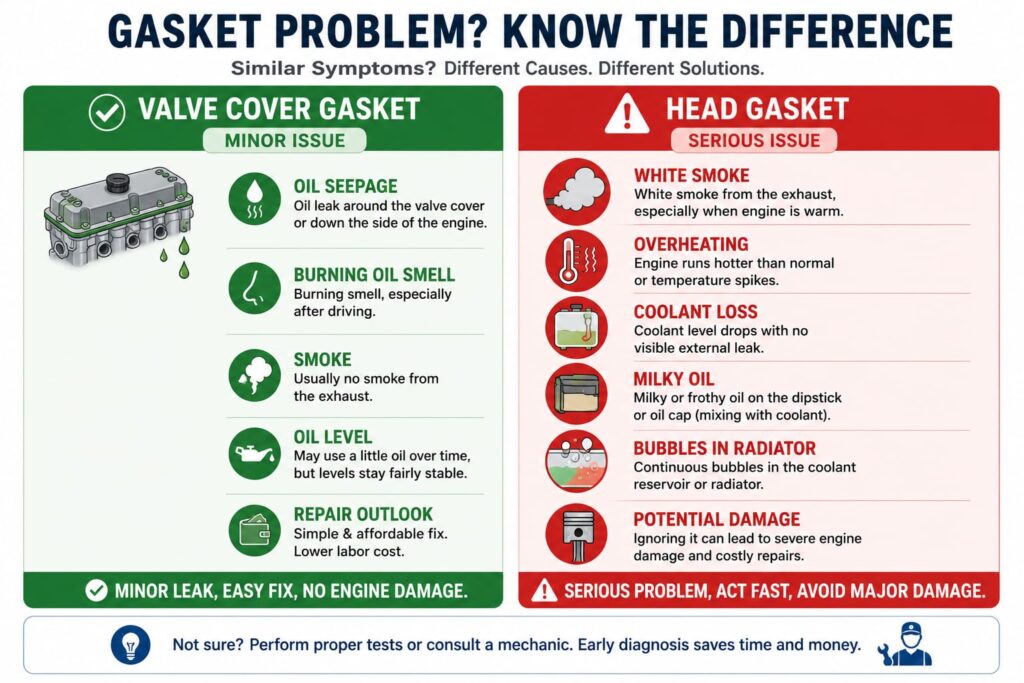
The valve cover gasket sits under the plastic or metal cover on top of your engine, sealing in the oil that lubricates the valve train components underneath. It’s a relatively simple, low-pressure seal. The head gasket, by contrast, sits between the cylinder head and the engine block, sealing combustion, oil, and coolant passages under extreme heat and pressure. One is a straightforward, often under-an-hour job; the other is a multi-day engine teardown involving specialized tools and precise torque specifications.
The confusing part is that the giveaway symptom is often similar for both — an oil leak or a burning smell — which is exactly why people aren’t always sure which repair they actually need until a mechanic takes a proper look.
What Affects Valve Cover Gasket Cost
- Whether the cover needs to be removed around other components, since some engine bays are tighter than others
- Whether spark plugs or ignition coils sit under the valve cover and need to be removed first to access it
- Gasket material — rubber, cork, or silicone gaskets vary slightly in material cost
- Local labor rates, since parts cost is typically a minor part of the total compared to labor
Signs You Need a Valve Cover Gasket (Not a Head Gasket)
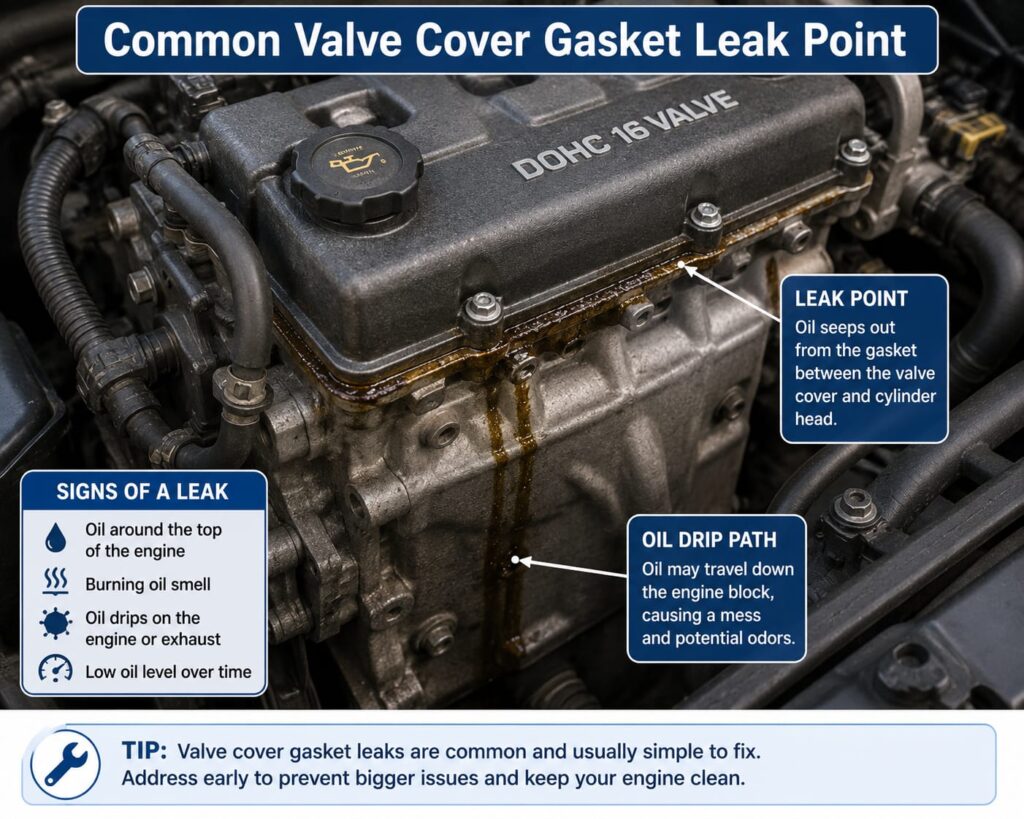
- Oil visibly seeping from the top edge of the engine, often pooling near spark plug wells
- A burning oil smell without accompanying white exhaust smoke or coolant loss
- No overheating, no milky oil, no coolant contamination — these symptoms point toward the head gasket instead
Why This Confusion Costs People Money
Because “gasket replacement” sounds similar regardless of which specific gasket is involved, this mix-up cuts both ways. Some people pay for an unnecessary, expensive head gasket diagnosis when a simple valve cover fix would have solved the problem. Others underestimate a genuine head gasket issue, assuming it’s a quick fix similar to the valve cover job, and end up surprised by the real scope and cost. Getting a clear, specific diagnosis before agreeing to any repair protects you from both mistakes.
Can You Replace It Yourself?
For moderately confident DIYers, a valve cover gasket is one of the more approachable gasket jobs on most engines. It typically involves removing the cover, cleaning both mating surfaces thoroughly, seating the new gasket, and torquing the cover bolts evenly in the correct sequence to avoid warping the cover or creating an uneven seal. Some engine layouts make this easier than others — if spark plugs, coils, or other components sit in the way, factor in the extra time and parts you might disturb in the process.
| Symptom | Likely Cause |
| Oil seepage at top of engine, no overheating | Valve cover gasket |
| White smoke + overheating + milky oil | Head gasket |
| Burning smell only, no coolant loss | Valve cover gasket |
| Coolant loss with no visible external leak | Head gasket |
Frequently Asked Questions
Is a valve cover gasket replacement a big repair?
No. It’s one of the simpler gasket jobs on most engines, often completed in under an hour depending on what needs to be moved out of the way first.
Can I drive with a leaking valve cover gasket?
For a short time, yes, but a slow oil leak can worsen over time and eventually lead to low oil levels, so it’s worth addressing sooner rather than later.
How do I know if I need this or a full head gasket replacement?
Look closely at the symptoms: oil seepage without overheating or coolant issues usually points to the valve cover gasket, while white smoke, overheating, or milky oil point toward the head gasket instead.
[LINK: How to Test for a Blown Head Gasket -> confirm the diagnosis before