
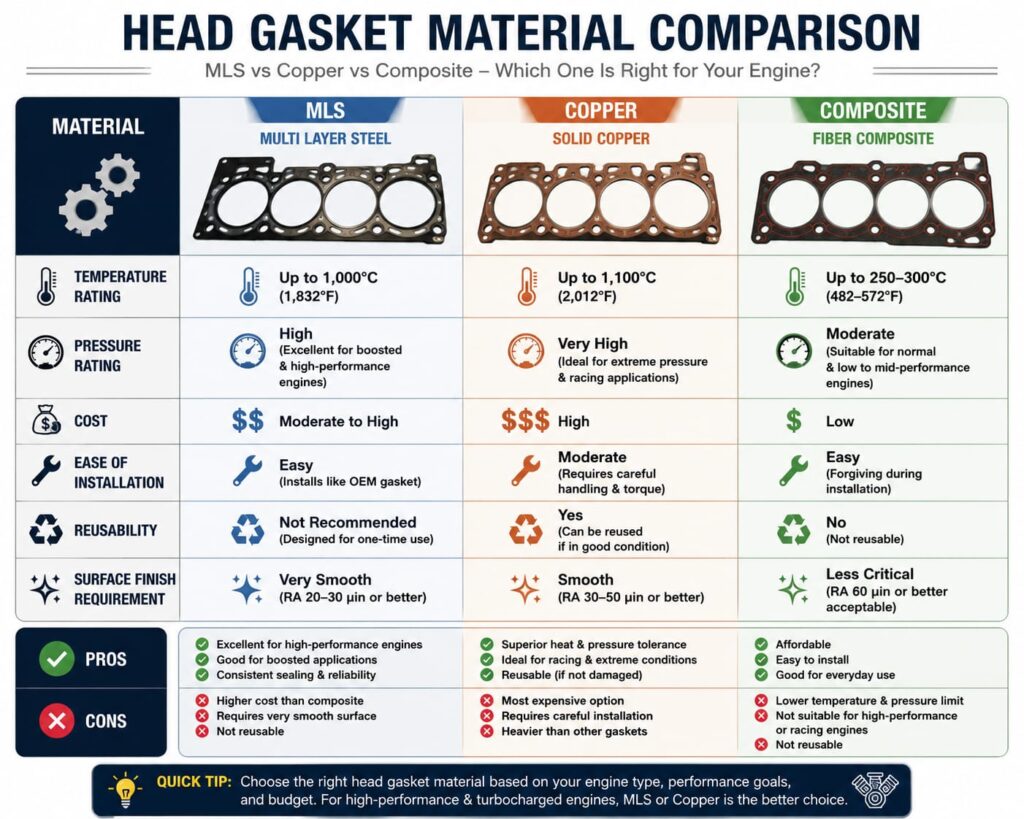
Modern cars are filled with gaskets — far more than most people realize. While the head gasket gets all the attention, dozens of smaller gaskets seal everything from the oil pan to the transmission cooler lines. Understanding what gaskets exist, where they’re located, and when they need replacement helps you maintain your vehicle properly and anticipate repair costs.
The Main Head Gasket (1)
Function: Seals the combustion chamber between the cylinder head and engine block
Critical? YES — failure leads to catastrophic engine damage
Typical lifespan: 100,000-150,000 miles on stock engines (longer on quality engines, shorter on turbocharged)
Additional Engine Block Gaskets (8-12)
- Oil pan gasket
- Valve cover gasket (1 per cylinder head)
- Intake manifold gasket
- Exhaust manifold gasket (1 per bank)
- Water pump gasket
- Thermostat housing gasket
- Engine front cover gasket
- Timing cover gaskets
Transmission and Accessory Gaskets (4-6)
Transmission pan gasket (automatic transmission)
- Transmission case gaskets (multiple, internal)
- Transmission cooler line gaskets (if equipped)
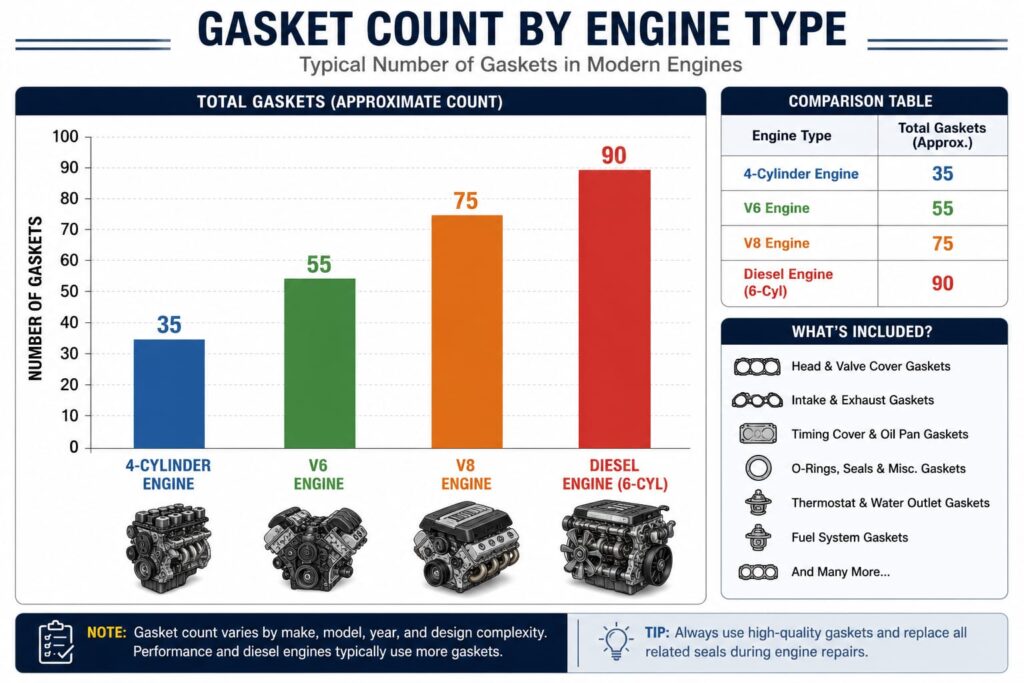
Total Gasket Count
A typical 4-cylinder engine: 12-15 gaskets
- A typical V6 engine: 15-20 gaskets (more valve covers, double exhaust manifolds)
- A typical V8 engine: 18-25 gaskets (more valve covers, larger transmission)
- Luxury/complex engines: 25-35+ gaskets
For more on head gaskets specifically: [PILLAR LINK: High Performance Head Gaskets]
FAQ
Q: Do I have to replace all gaskets during an engine rebuild?
A: Best practice is yes — gaskets are inexpensive compared to labor, and replacing only the head gasket while leaving aged valve cover and oil pan gaskets in place often leads to leaks shortly after the repair.
Conclusion
Modern engines contain 12-35+ distinct gaskets depending on complexity. Each serves a critical sealing function. Understanding this inventory helps you make informed maintenance decisions and anticipate future repair costs.