
The leak-down test is the gold standard for cylinder compression leak diagnosis. Unlike a standard compression test that measures maximum pressure, a leak-down tester measures how much pressure is lost over time. A high leak-down percentage indicates internal leaks—and when combined with other symptoms, definitively points to head gasket failure.
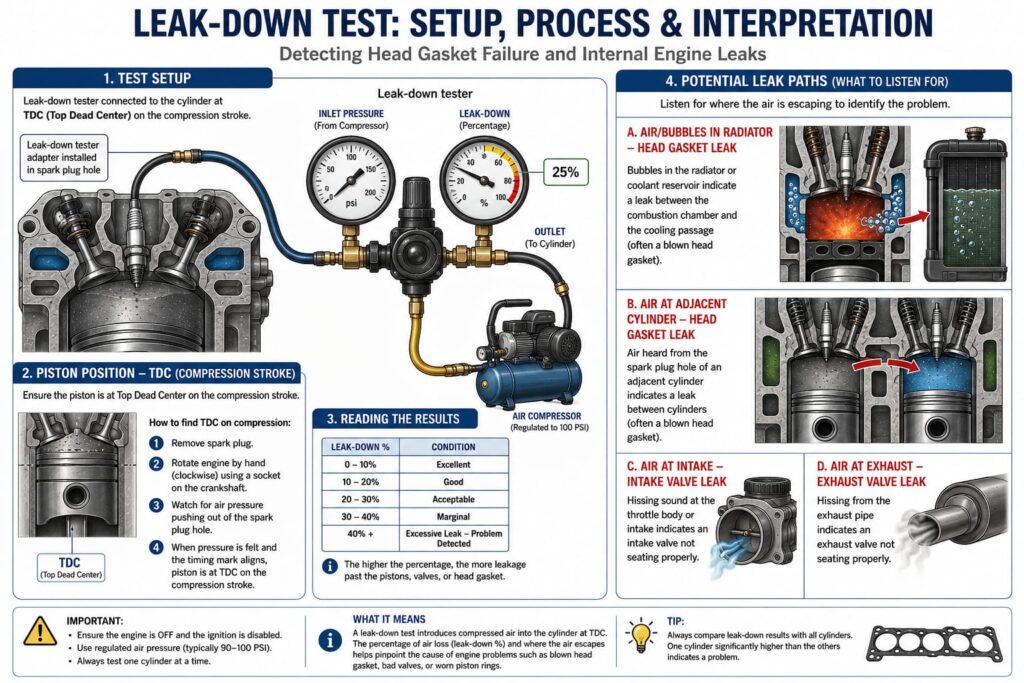
How Leak-Down Testing Works
A leak-down tester pressurizes a single cylinder to a fixed pressure (typically 100 PSI) and measures how quickly pressure drops. Healthy cylinders leak minimally (0-5%). Worn rings leak moderately (5-15%). Head gasket failure produces high leak rates (15%+) and often produces audible hissing from the radiator or oil filler cap.
Equipment Needed
• Leak-Down Tester ($100-300 purchase; $20-40 rental)
• Air Compressor (powers the tester)
• Socket Set (to remove spark plugs)
• TDC Indicator or Timing Mark Tool (positions pistons at top dead center)
• Stethoscope or Listening Rod (to hear escaping air)
• Notebook (to record leak percentages)
Step-by-Step Procedure
Step 1: Position Cylinder 1 at Top Dead Center (TDC)
Remove the spark plug from Cylinder 1. Using the crankshaft bolt, rotate the engine until the piston is at the very top of its stroke. You can verify this by feeling for compression resistance when turning the crankshaft or using a piston stop tool.
Step 2: Connect the Leak-Down Tester
Install the leak-down tester into the spark plug hole. Connect an air compressor line to power the tester. The device will pressurize the cylinder to 100 PSI.
Step 3: Record the Leak Percentage
The tester displays leak percentage on a gauge. Record this number for Cylinder 1. A percentage under 5% is normal; 5-15% indicates ring wear; over 15% suggests head gasket or valve issues.
Step 4: Listen for Leakage Location
With the tester running, place a stethoscope or listening rod near the radiator, oil filler cap, exhaust, and intake. Hissing from the radiator indicates head gasket leakage. Hissing from the oil cap indicates ring or gasket problems. Exhaust/intake hissing indicates valve issues.
Step 5: Repeat for All Cylinders
Reposition the engine for Cylinder 2 at TDC, repeat the test, and continue for all cylinders. Compare leak percentages.
Interpreting Leak-Down Results
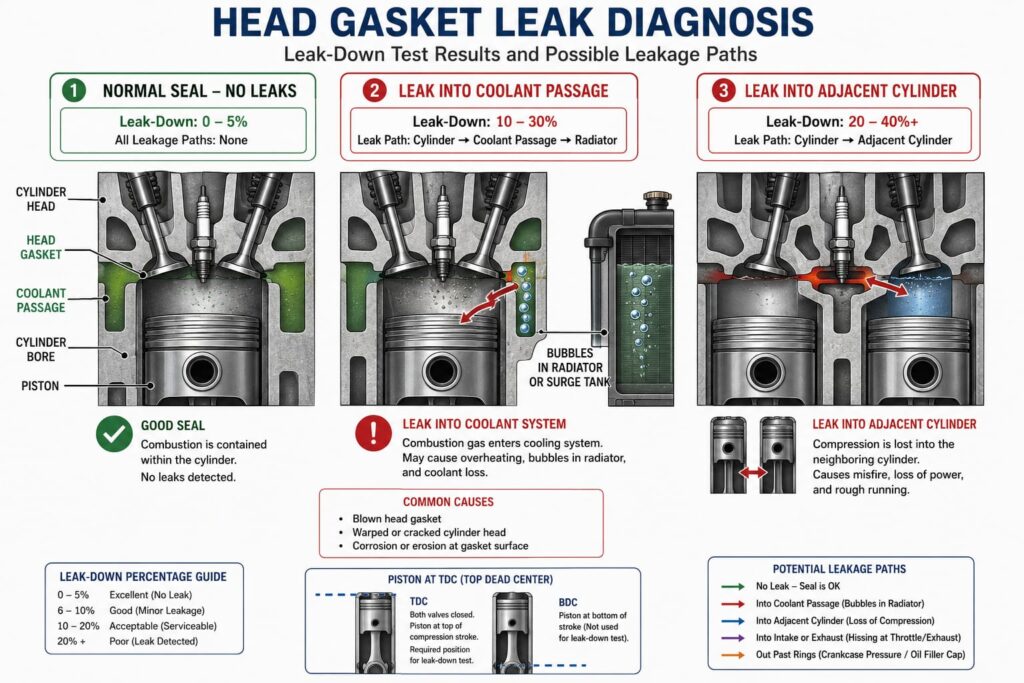
0-5% Leak: Normal operation. Cylinder is healthy.
5-10% Leak: Minor wear. No immediate action needed, but monitor.
10-15% Leak: Moderate wear or small leak. Investigation recommended.
15-25% Leak: Significant leak. Head gasket or valve issue likely.
Over 25% Leak: Severe leak. Immediate repair necessary.
Hissing Location Guide:
• Radiator hissing = Head gasket failure
• Oil filler hissing = Ring or gasket problem
• Exhaust hissing = Exhaust valve leak
• Intake hissing = Intake valve leak
Advantages of Leak-Down Testing
✅ Most Precise Diagnosis: Measures leak percentage, not just presence/absence
✅ Identifies Leak Location: Listening indicates where pressurized air escapes
✅ Quantifies Severity: Provides percentage data for repair planning
✅ Professional Grade: Accepted by mechanics and insurance companies
✅ Differentiates Issues: Clearly shows whether problem is rings, valves, or gasket
Limitations of This Test
❌ Expensive Equipment: $100-300 to purchase; $20-40 to rent daily
❌ Complex Procedure: Requires understanding of engine mechanics
❌ Time-Intensive: Testing all cylinders takes 1-2 hours
❌ Professional Skill Needed: Best performed by experienced technicians
Cost and Time Estimate
Leak-Down Tester Purchase: $100-300 (significant investment)
Leak-Down Tester Rental: $20-40 per day from tool rental shops
Professional Shop Test: $75-150 in labor costs
Time Required (DIY): 1-2 hours for all cylinders
When to Send It to a Professional
While DIY leak-down testing is possible, professional mechanics often perform this test because they have expensive equipment and deep experience interpreting results. Consider professional testing if:
• You’re unsure about TDC positioning
• You lack an air compressor
• You want definitive documentation (for insurance or legal purposes)
• Your vehicle’s engine design is complex
FAQ
Q: Can I rent a leak-down tester instead of buying?
A: Yes. Tool rental shops rent leak-down testers for $20-40 per day. This is cost-effective if you only test once.
Q: What’s considered an acceptable leak percentage?
A: Under 5% is excellent. 5-10% is acceptable for older vehicles. Over 10% indicates problems.
Conclusion
The leak-down test is the ultimate diagnostic tool for confirming head gasket failure with precision. By measuring leak percentage and identifying leak location through listening, you gain comprehensive diagnostic data. Whether you rent the equipment or have a professional perform the test, leak-down results provide the evidence needed to commit to head gasket replacement with confidence.
Have you tested with other methods? Review all options in the [PILLAR LINK: How to Test a Blown Head Gasket – Complete Guide] for comprehensive diagnosis.