
Cylinder Head Resurfacing Stone: The Low-Cost DIY Option
Not every warped cylinder head needs a trip to a professional machine shop. For very minor surface imperfections, a resurfacing stone — sometimes called an engine block resurfacing hand tool — offers a manual, low-cost way to true up a surface without specialized machinery. It’s not a replacement for proper machining in every case, but it has a real place in certain repairs.
This post is part of our complete guide on using head gasket sealer and understanding proper installation — see the full breakdown below.
“complete head gasket installation guide”
What a Resurfacing Stone Actually Is
A resurfacing stone is a flat, abrasive block — often made from a durable composite or stone material — used by hand to gently true up a cylinder head or engine block deck surface. Unlike a powered milling or grinding machine, it relies entirely on manual pressure and a back-and-forth motion, which limits how much material it can realistically remove but also gives you finer control over very minor corrections.
How to Use a Resurfacing Stone
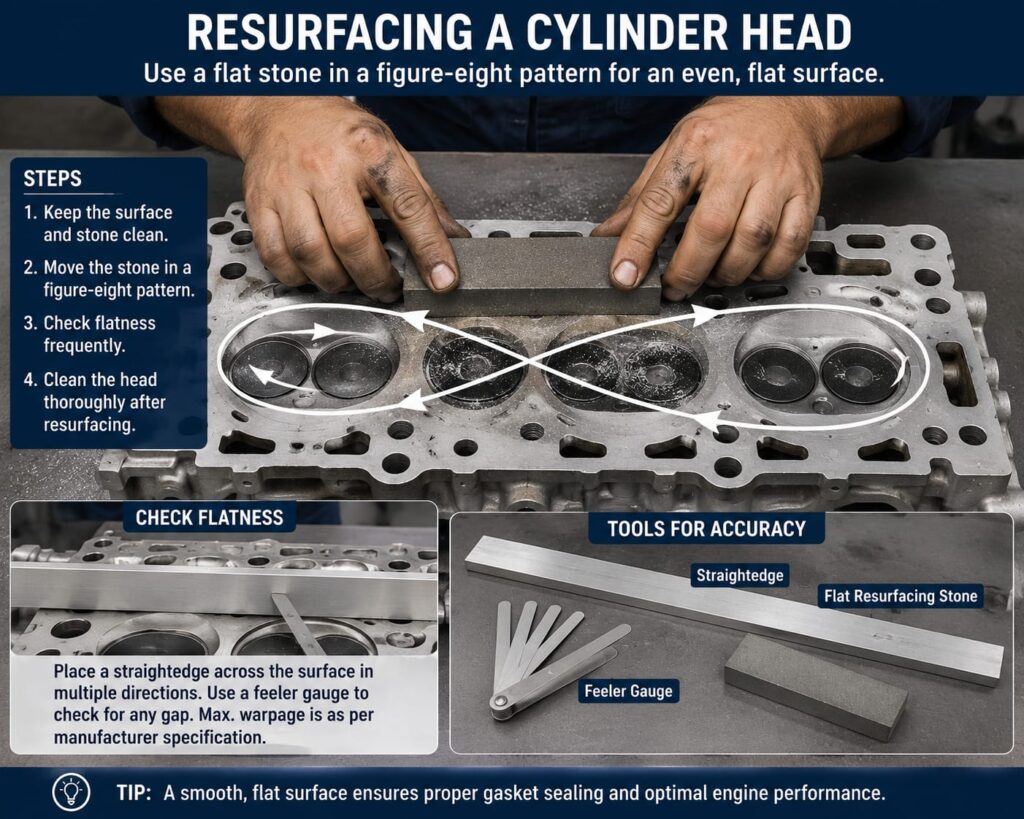
- Clean the head surface completely of old gasket material and debris before starting.
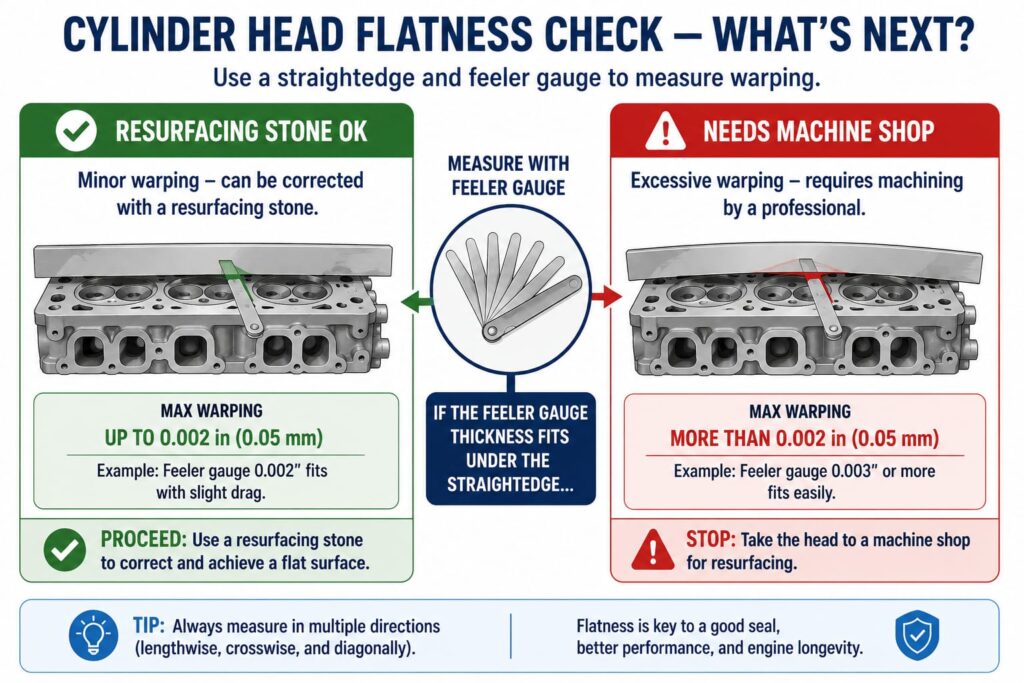
- Check the surface with a straightedge and feeler gauge first to confirm the warping is minor enough for this method.
- Using light, even pressure, move the stone in a consistent pattern (often a figure-eight or back-and-forth motion) across the entire surface.
- Re-check flatness periodically with the straightedge to avoid removing more material than necessary.
- Clean all abrasive residue thoroughly before reassembly, since leftover grit can damage the new gasket seal.
When a Resurfacing Stone Is Appropriate
- The warping is very minor — often just a few thousandths of an inch, confirmed with a feeler gauge
- You’re working on a smaller engine or a project where sending the head to a machine shop isn’t practical
- You have the patience for a slow, manual process and want to avoid the cost and turnaround time of outsourcing
When You Need a Machine Shop Instead
If the straightedge check reveals warping beyond a very minor tolerance, a resurfacing stone simply isn’t capable of correcting it accurately or efficiently. Forcing the issue by hand risks an uneven surface, which can be worse than not resurfacing at all, since it can create new high and low spots rather than a true flat plane. At that point, a professional resurfacing machine is the appropriate tool for the job.
[LINK: Cylinder Head Resurfacing Machine]
Frequently Asked Questions
Can a resurfacing stone fully fix a warped head?
Only for very minor warping. It’s a manual, low-precision tool compared to a machine, so its effective range is limited to small corrections.
Is a resurfacing stone safe to use on aluminum heads?
Generally yes, when used carefully with light, even pressure, though aluminum is softer and shows scratches more easily than cast iron, so a gentle touch matters.
How do I know if my warping is too severe for a stone?
Check with a straightedge and feeler gauge first. If the gap exceeds a very small tolerance (check your manufacturer’s specification), a machine shop is the safer and more reliable option.