
If you’ve searched for head gasket sealer at all, you’ve almost certainly come across K-Seal. It’s one of the most recognized brands in this space, largely because of how it’s marketed — as a permanent fix rather than a temporary patch, and one that doesn’t require draining your coolant first. But does it live up to that reputation? Here’s an honest look.
This post is part of our complete guide on using head gasket sealer and understanding proper installation — see the full breakdown below.
“complete head gasket installation guide”]
What K-Seal Is and How It’s Different
K-Seal is a one-step sealant designed to be added directly to your existing coolant without draining or flushing the system first. Its ceramic-based formula is engineered to circulate through the cooling system and specifically target the point of a leak, hardening there while remaining liquid everywhere else in the system. This is the key difference many people point to compared to older, more generic sealant products, which sometimes clogged narrow passages indiscriminately rather than targeting the actual leak point.
How to Use K-Seal Head Gasket Sealer
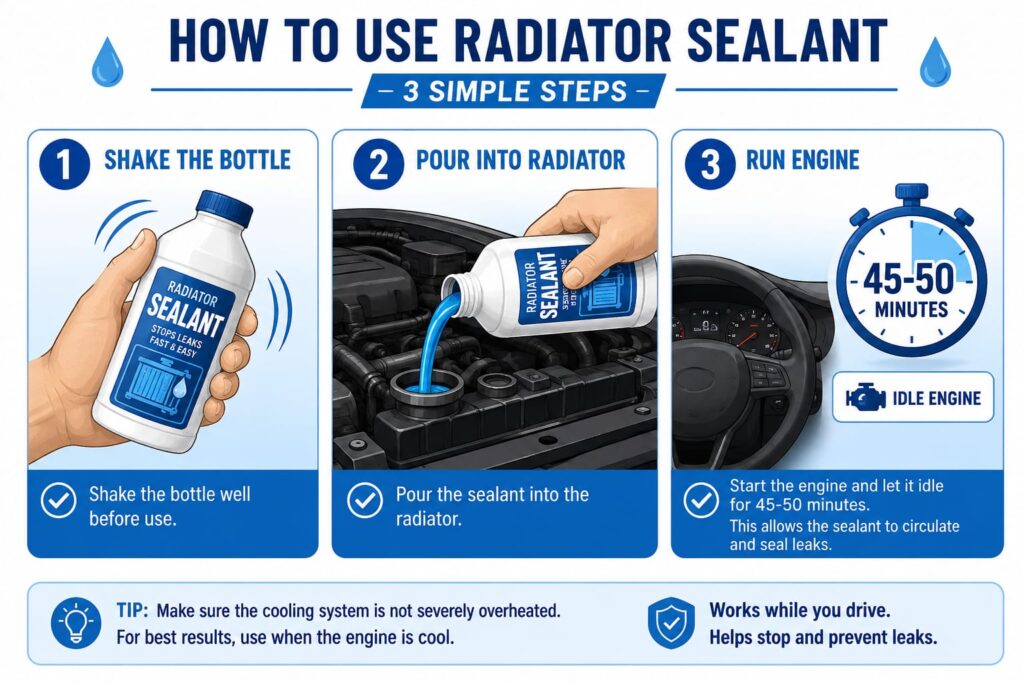
- Shake the bottle well before use, as the ceramic particles can settle.
- Make sure the engine is at a safe, cool-to-warm temperature as specified on the packaging — not stone cold, not overheated.
- Pour the full bottle into the radiator or coolant reservoir, following the dosage instructions for your cooling system size.
- Start the engine and let it idle for the specified time, typically around 45-50 minutes, allowing the product to circulate and find the leak.
- Check the coolant level afterward and top off if needed, then monitor for several days of normal driving.
Does K-Seal Actually Work?
For its intended use case — small hairline cracks in the gasket, minor porosity leaks, or small cracks in the head, block, or radiator — many users and independent reviews report genuine success. It is not, however, a fix for a fully blown or separated head gasket, a severely warped head, or a large coolant passage breach. The size and nature of the leak matters far more than the specific brand of sealer used.
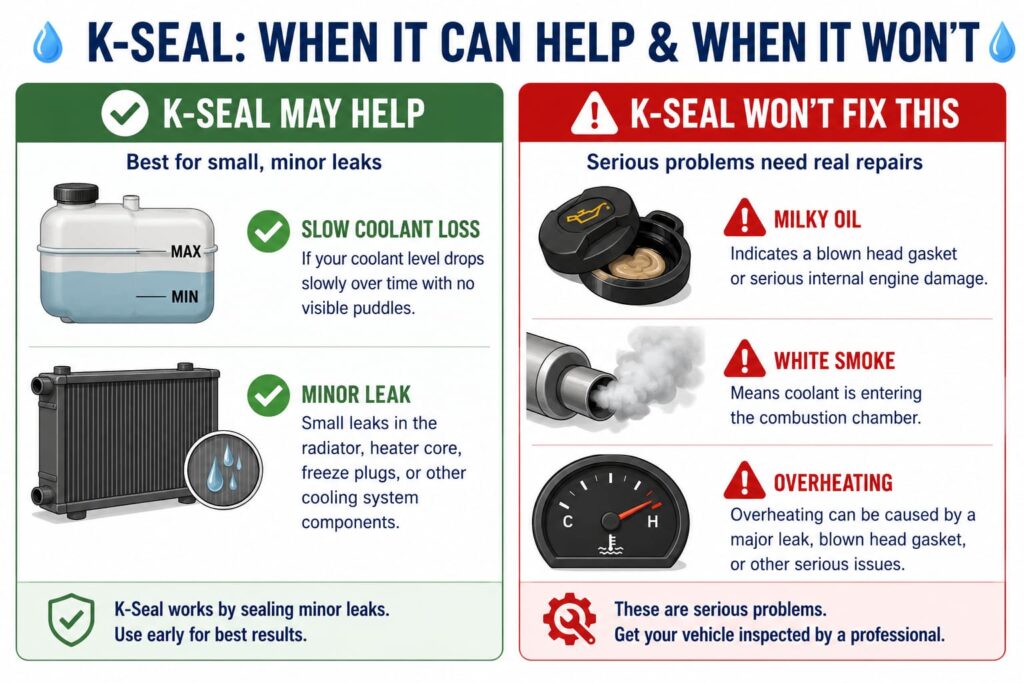
When K-Seal Is a Good Option
- You’ve noticed a very slow coolant loss with no other major symptoms (no milky oil, no continuous white smoke)
- A pressure test or chemical block test confirms a small leak rather than a major failure
- You want a cost-effective way to buy time before scheduling a full repair
When K-Seal Won’t Save You
- Milky or foamy engine oil, indicating significant coolant-oil mixing
- Thick continuous white smoke from the exhaust after warm-up
- A confirmed diagnosis of a fully failed or separated gasket via compression or leak-down testing
- Repeated overheating that returns within days despite using the product
Frequently Asked Questions
Is K-Seal safe to leave in my engine permanently?
Yes, according to the manufacturer, it’s designed to remain in the cooling system indefinitely without needing to be flushed out, unlike some older sealant products.
Can I use K-Seal alongside regular coolant?
Yes, it’s designed to be added directly to your existing coolant without draining it first, which is one of its main selling points.
How do I know if K-Seal worked?
Monitor your coolant level and temperature gauge over the following week. If the leak has stopped and temperatures stay normal, it likely worked. If symptoms return, it’s a sign the underlying damage is more significant than the product can handle.
[LINK: How to Test for a Blown Head Gasket -> confirm the diagnosis before using sealer]
“back to the full installation guide”]
[LINK: Is a Blown Head Gasket Worth Fixing -> Related Post]