
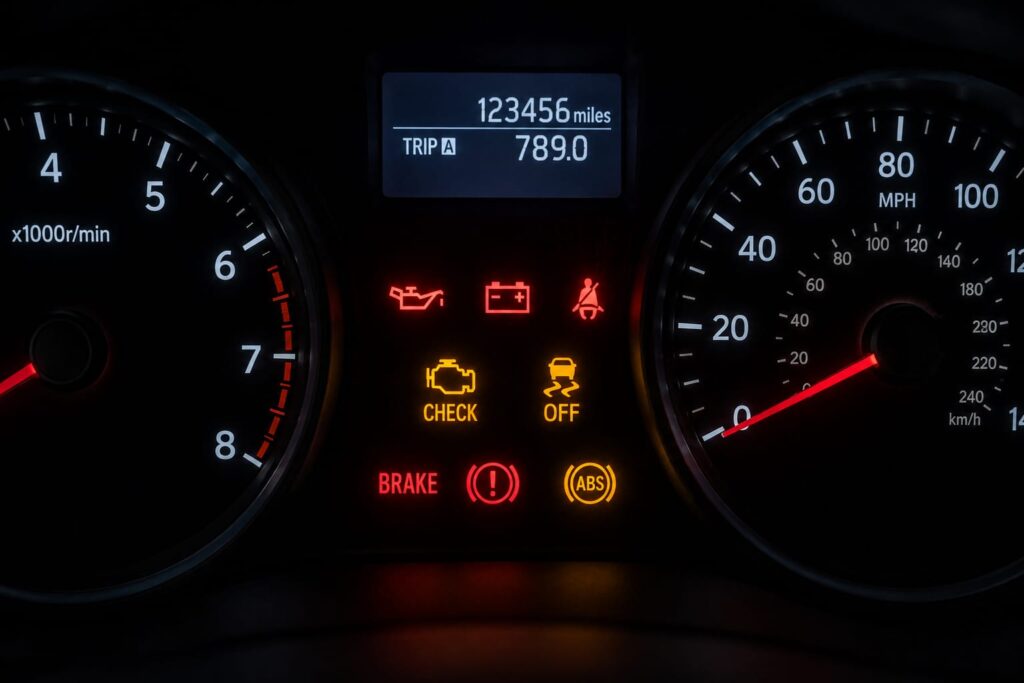
Not every engine problem announces itself clearly. Sometimes it’s not thick white smoke or milky oil on the dipstick — it’s something vaguer. The car feels a little off. There’s a smell you can’t place. A warning light flickers and then goes away. These general symptoms are easy to dismiss because, taken alone, they don’t point to any one specific problem. But they’re still worth paying attention to, especially if more than one shows up around the same time.
This guide walks through the most common general engine symptoms, what they can mean on their own, and when they’re worth connecting back to something more specific — including a head gasket problem.
Noticeable Loss of Power or Acceleration
A gradual or sudden drop in how the engine responds — hesitation when you press the gas, or a feeling that the car just isn’t pulling like it used to — can come from dozens of causes: a dirty air filter, a failing sensor, worn spark plugs, or a fuel delivery issue. On its own, this symptom is too general to diagnose anything specific.
Where it becomes more meaningful is when it shows up alongside something else, particularly if compression is bleeding between cylinders or into the cooling system through a compromised head gasket. In that case, the power loss tends to come with other signs — a rough idle, a misfire, or a rising temperature gauge — rather than showing up completely in isolation.
A Faint but Persistent Coolant Smell Inside the Cabin
A sweet smell inside the car, especially near the vents or at idle, is often the heater core doing its job when there’s a coolant leak somewhere in the system feeding it. Most of the time, this points to a leaking heater core, hose, or connection rather than the head gasket itself.
It’s worth knowing about here because there’s a less common path to the same smell: if gas pressure from a leaking head gasket is pushing exhaust byproducts back through parts of the cooling system, that can occasionally make its way to the heater core and into the cabin air. It’s not the most likely explanation, but it’s one worth ruling out if other head gasket symptoms are also present.
A Flickering or Illuminated Oil Pressure Warning Light
An oil pressure light is not something to drive through casually — low oil pressure can starve the engine of lubrication quickly and cause serious damage. Common causes include low oil level, a failing oil pump, or a bad pressure sensor.
Less commonly, a head gasket failure can affect oil pressure indirectly, either through coolant diluting the oil (which changes its viscosity and lubricating properties) or through a leak path that happens to run near an oil passage. If the light comes on alongside milky oil on the dipstick or coolant that keeps disappearing, that combination is worth treating seriously rather than assuming it’s just a sensor glitch.
Unusual Noises That Don’t Fit a Pattern
Ticking, knocking, or a new rattling sound can come from dozens of unrelated sources — a loose heat shield, worn valve lifters, a failing accessory bearing. These noises are rarely diagnostic of a head gasket problem specifically, but persistent noise changes are still worth having checked, since ignoring engine noise in general is one of the more common ways small problems become expensive ones.
Fluid Leaks You Can’t Immediately Identify
Spots under the car, a burning smell, or fluid on the ground that doesn’t match coolant or oil in color can come from a transmission leak, power steering fluid, or a dozen other sources. If you’ve also noticed coolant disappearing with no visible puddle anywhere, that’s a different and more specific pattern worth reading about separately, since it often points to coolant being consumed internally rather than leaking externally.
When These General Symptoms Point Back to a Head Gasket
None of the symptoms on this page are diagnostic of a blown head gasket on their own — that’s the whole point of calling them “general.” Where they become useful is in combination. A car with a power loss and a flickering oil light and a coolant smell is telling a very different story than a car with just one of those things happening in isolation. If you’re seeing two or more of these alongside anything more specific — white or blue exhaust smoke, milky oil, overheating, or coolant that keeps vanishing — the odds shift meaningfully toward a head gasket problem worth testing for properly.
When to See a Mechanic
General symptoms are rarely urgent on their own, but a few things should move you from “keep an eye on it” to “get it looked at soon”: any combination of two or more symptoms from this page happening together, an oil pressure light that stays on rather than flickering briefly, or any of these appearing alongside a rising temperature gauge. Waiting on a genuine warning sign rarely saves money — it usually just delays a diagnosis while the underlying problem keeps developing.
Where to Go From Here
If any of this sounds familiar alongside more specific signs, our Blown Head Gasket: Every Symptom, Cause, and Next Step Explained guide covers the full range of symptoms in detail, and our How to Test for a Blown Head Gasket guide explains how to confirm a diagnosis properly before committing to a repair.