
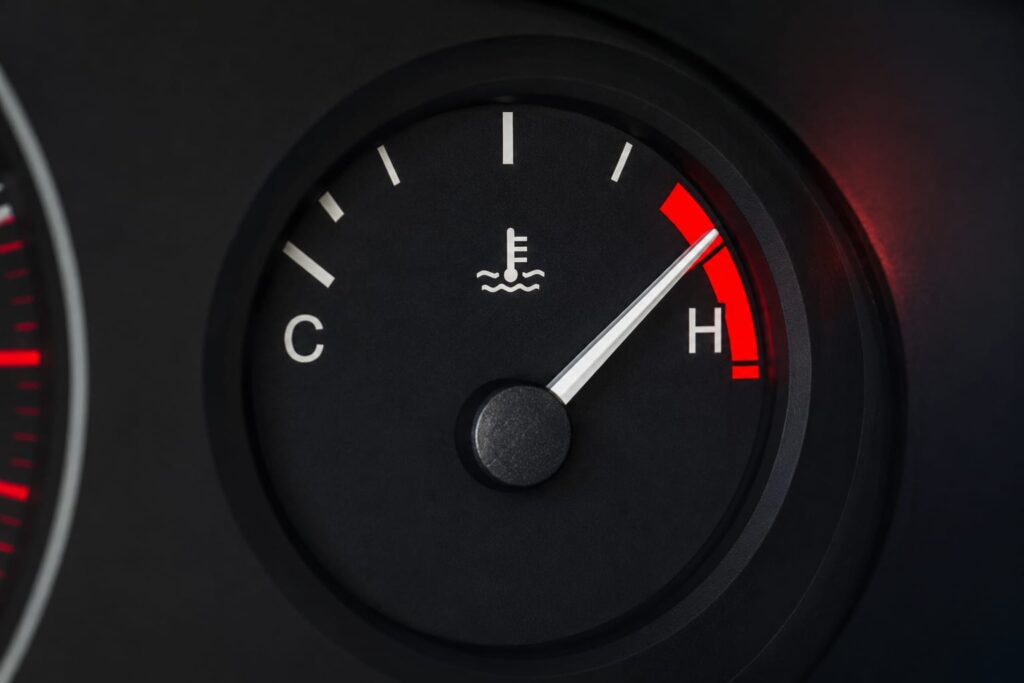
A climbing temperature gauge is one of the more confusing symptoms to diagnose, because it can sit on either side of the cause-and-effect relationship. Sometimes overheating is what breaks the gasket down in the first place. Other times, a gasket that has already failed is what’s causing the overheating. Telling the two apart matters, because it changes what actually needs to be repaired.
How a Failed Gasket Causes Overheating
When combustion gases leak into the cooling system through a breached gasket, they create pockets of pressure and air bubbles that interfere with how coolant actually circulates. The cooling system loses its ability to move heat efficiently out of the engine, and the temperature gauge climbs — sometimes gradually over several drives, sometimes in a sudden spike under load, such as towing or highway driving on a hot day.
How Overheating Causes a Gasket to Fail
Chronic overheating from a cause unrelated to the gasket — a failing water pump, a stuck thermostat, a cracked radiator, or low coolant from an external leak — puts the cylinder head and engine block through repeated thermal stress. Metal expands and contracts more than it’s designed to, and that stress is one of the most common root causes of gasket failure. In many cases, it’s the overheating that happened first, and the gasket failure that followed as a result.
The Pattern That Helps You Tell Them Apart
If your car overheated once before you noticed any other symptoms, and other signs like white smoke or milky oil showed up afterward, there’s a reasonable chance the overheating caused the gasket to fail. If you’ve never had an overheating issue before, and you’re suddenly seeing a rising temperature gauge alongside white smoke or milky oil with no clear external cause, the gasket failure is likely what’s driving the new overheating.
There’s also a practical test based on when the overheating happens. If the temperature gauge only spikes under specific conditions — towing, climbing a long grade, sitting in traffic on a hot day — and returns to normal once the load eases, that pattern fits a gasket that’s leaking combustion gas into the cooling system intermittently under load. If the car runs hot consistently regardless of load or conditions, the root cause is more likely elsewhere in the cooling system, and any gasket damage may be a downstream effect rather than the original problem.
Why Getting This Right Matters
Replacing a head gasket without fixing the underlying cooling system problem that caused it to fail in the first place is a common and expensive mistake — the new gasket is likely to fail again under the same thermal stress. Similarly, replacing a water pump or thermostat without addressing a gasket that’s already leaking into the cooling system won’t stop the overheating. A cooling system pressure test alongside a combustion leak test can usually settle which repair is actually needed.
What to Do If You’re Overheating Right Now
If the temperature gauge is climbing while you’re driving, pull over and let the engine cool before continuing, rather than pushing on to a destination. Continuing to drive on an overheating engine — regardless of what’s causing it — is one of the fastest ways to turn a moderate repair into a much larger one, including a warped cylinder head or cracked engine block.
Full breakdown: see our Blown Head Gasket guide for the complete list of related symptoms, causes, and next steps.