
A head gasket has one of the toughest jobs in the engine — sealing combustion pressure, coolant, and oil simultaneously, all while sitting between two of the hottest, most stressed components in the car. When it fails, there’s usually a specific reason behind it, and understanding which one applies to your situation matters, since some causes point to a straightforward gasket swap while others mean the same failure will happen again unless something else is fixed first.
Why the Problem Concentrates in One Cylinder
When coolant or combustion gas leaks into a cylinder through a failed section of gasket, it disrupts the combustion process specifically in that cylinder. Coolant entering a combustion chamber doesn’t burn the way fuel does, which throws off the air-fuel ratio and the pressure the cylinder is supposed to generate on each stroke. The other cylinders, meanwhile, keep running normally, which is why the roughness or misfire often feels isolated rather than engine-wide.
How This Differs From a Spark Plug or Ignition Misfire
A misfire from a worn spark plug, a bad ignition coil, or a fuel injector problem can also feel like it’s coming from one cylinder, so a rough idle alone doesn’t confirm a gasket issue. What tends to set a gasket-related misfire apart is the company it keeps — white or blue-white exhaust smoke, a sweet smell from the tailpipe, milky oil, or a rising temperature gauge showing up around the same time as the rough running. An ignition-related misfire usually shows up without any of those other symptoms.
How a Compression Test Confirms It
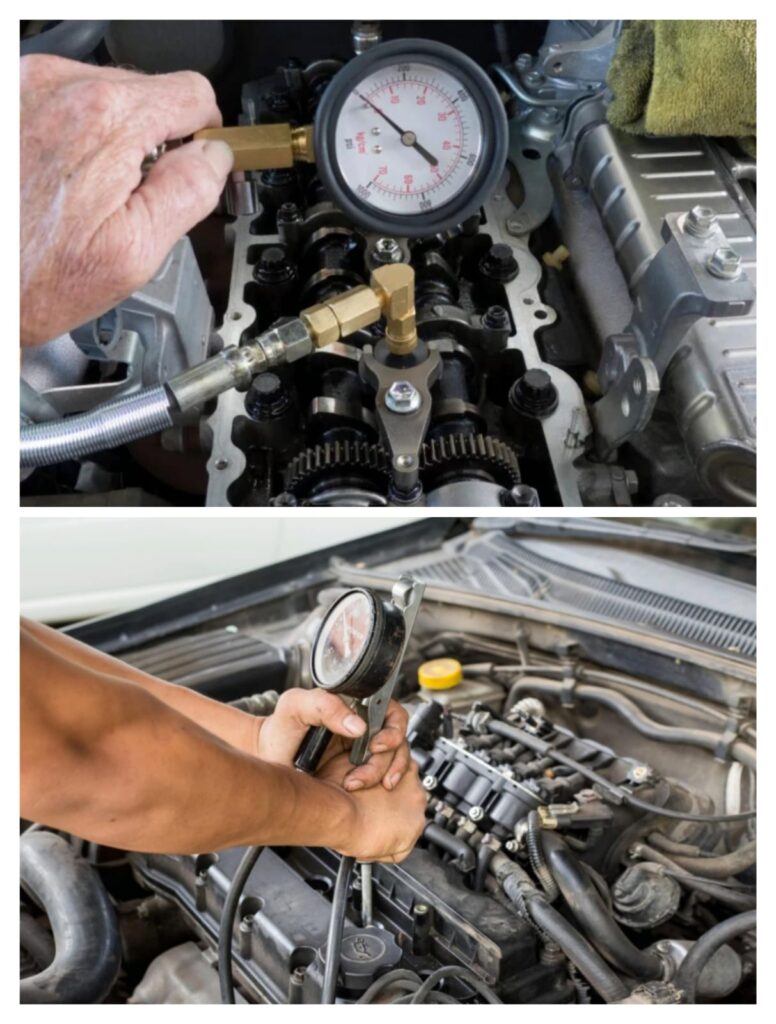
A compression test measures how much pressure each cylinder builds during its compression stroke, cylinder by cylinder. If a head gasket has failed between two adjacent cylinders, both of those cylinders often show unusually low or uneven compression compared to the others, since pressure is leaking between them instead of staying contained. A single low cylinder with no obvious pattern to its neighbors points more toward a valve, piston ring, or ignition problem rather than a gasket breach specifically. A leak-down test, which measures how quickly air escapes a cylinder held at top dead center, can add more detail — including whether the leak is heading toward an adjacent cylinder, into the cooling system, or out through the exhaust valve, each of which points to a different underlying problem.
What Else to Check
If you’re noticing a localized rough idle or misfire, it’s worth checking for exhaust smoke, an unusual smell, the oil dipstick, and the temperature gauge over the next several drives. A gasket-related misfire rarely stays completely isolated for long — other symptoms tend to follow as the leak progresses.
What to Do Next
A misfire that’s isolated to one or two adjacent cylinders, especially alongside any of the other symptoms above, is worth having tested rather than assumed. A compression or leak-down test gives a mechanic the specific evidence needed to confirm a gasket problem before recommending a repair.
Full breakdown: see our Blown Head Gasket guide for the complete list of related symptoms, causes, and next steps.