
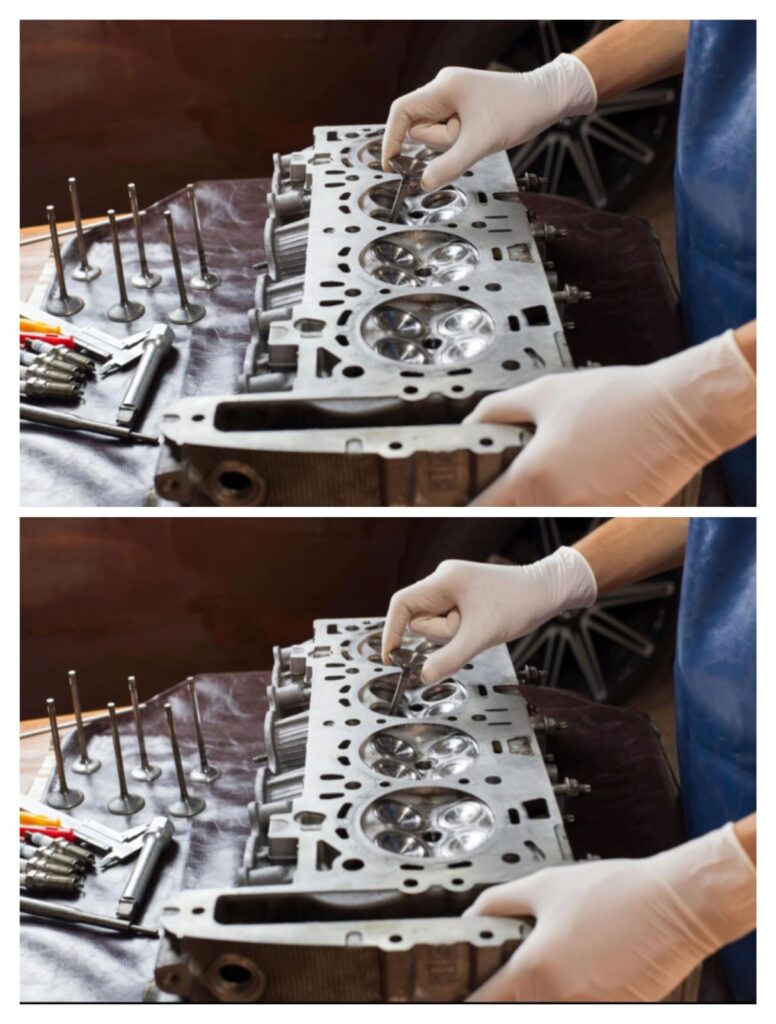
A cracked cylinder head can produce almost the exact same symptom list as a blown head gasket — white smoke, milky oil, overheating, coolant that disappears with no visible leak. That overlap is exactly why a proper diagnosis matters instead of guessing from symptoms alone, since the repair for a cracked head is more involved and more expensive than a gasket replacement on its own.
Why the Symptoms Look So Similar
Both a blown gasket and a cracked head create a path for coolant, combustion gas, or oil to cross between spaces they’re supposed to stay separated in. A gasket failure happens at the seal between the head and the block. A crack happens within the head casting itself — sometimes running through a coolant passage, sometimes into a combustion chamber, sometimes into an oil passage. Because the end result (fluids crossing where they shouldn’t) is similar, the visible symptoms often overlap almost completely.
How the Two Problems Are Connected
A cracked head and a blown gasket aren’t always separate, unrelated problems — they’re often connected. Chronic overheating severe enough to blow a gasket can, in some cases, also warp or crack the head itself, especially if the vehicle kept running hot for an extended period before the issue was caught and addressed. This is one of the main reasons a shop will often check the head for cracks or warping as a standard part of diagnosing what looked like a straightforward gasket failure.
How a Cracked Head Is Actually Diagnosed
Once the head is removed, a few checks confirm whether it’s cracked or warped. A visual and dye-penetrant inspection can reveal surface cracks that aren’t visible to the naked eye. A flatness check across the head’s mating surface, using a straightedge and feeler gauge, reveals warping that can prevent a new gasket from sealing properly even if no crack is present. In some cases, a pressure test with the head submerged in water can reveal a crack by showing air bubbles escaping from it.
Why This Matters Before You Pay for a Gasket Replacement
A new gasket installed on a warped or cracked head won’t hold a seal for long, regardless of how good the gasket itself is — the surface it’s sealing against is compromised. If a shop tells you the head needs to be checked as part of a gasket diagnosis, that’s a normal and important step, not an attempt to upsell you into unnecessary work. Skipping this check to save money upfront often means paying for a second gasket failure shortly after the first repair.
Repair Options If the Head Is Cracked
Depending on the size and location of the crack, a mechanic may recommend resurfacing the head (for minor warping without a crack), a specialized repair technique for certain crack types, or full head replacement, which is usually the most reliable option for anything beyond a very minor crack. Cost and labor time vary significantly between these options, which is part of why confirming the exact problem before committing to a repair path matters.
What to Do Next
If you’re already having a gasket diagnosed, ask whether the head is being checked for cracks or warping as part of that process — it’s a standard step that protects the repair you’re paying for.
Full breakdown: see our Blown Head Gasket guide for the complete list of related symptoms, causes, and next steps.