
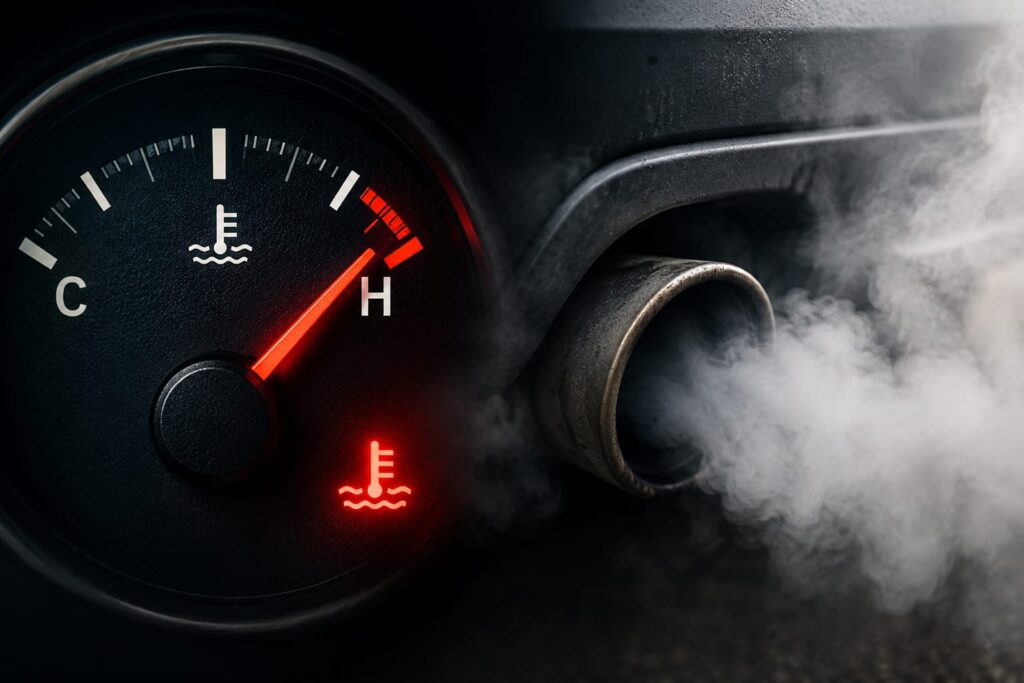
Most people who land on this page didn’t come here out of curiosity. Something’s already happening — smoke that wasn’t there last week, a temperature needle creeping higher than usual, or a strange residue on the dipstick that made you stop and Google it right there in the driveway. This guide walks through every major symptom of a blown head gasket, what’s actually going on inside the engine when each one shows up, what tends to cause the failure in the first place, and the honest answer to the question almost everyone asks eventually: can I keep driving like this?
How Do You Know If You Have a Blown Head Gasket?
Here’s the tricky part about a blown head gasket — it rarely announces itself the same way twice. Depending on exactly where the seal has failed (around a cylinder, along a coolant passage, or between two cylinders), the symptoms can range from a subtle performance dip you might not even notice for weeks, to a dramatic cloud of white smoke that has you pulling over on the highway. Some engines will run rough almost immediately. Others will keep running “fine” for a surprisingly long time while a small leak slowly gets worse in the background.
That’s part of why this failure catches so many people off guard. A gasket that seals combustion pressure, coolant, and oil all at once has a lot of ways to fail partially before it fails completely, and the order the symptoms show up in isn’t always predictable.
White or Blue Smoke From the Exhaust: What It Actually Means
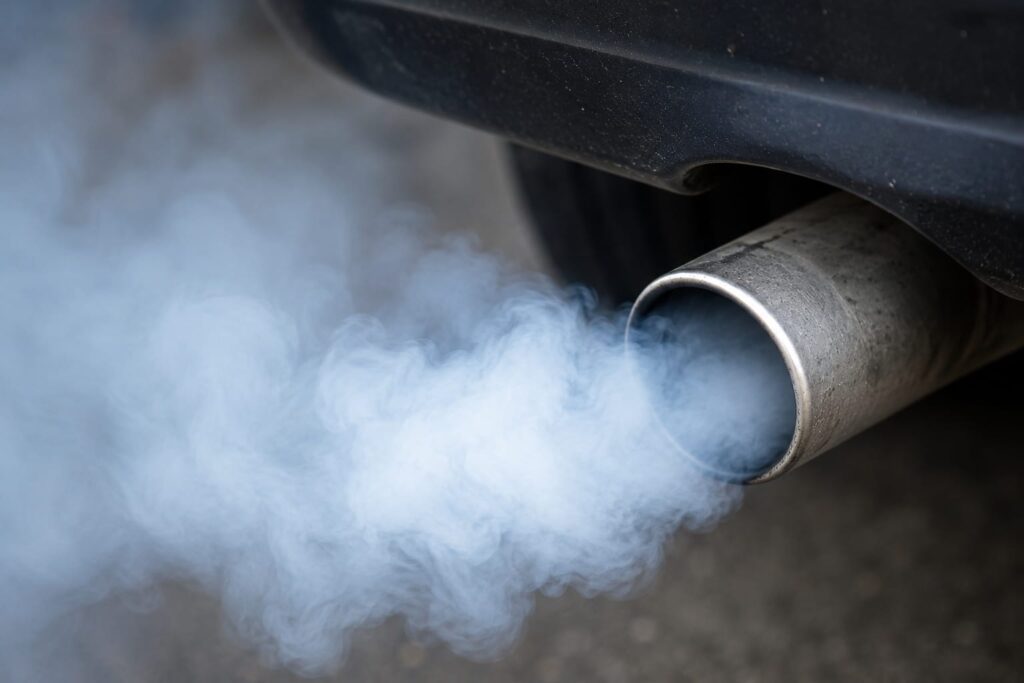
This is usually the symptom that sends people searching in a panic, and for good reason — it’s hard to miss. When you see a steady stream of white or blue-white smoke rolling out of the tailpipe, especially once the engine’s warmed up, it’s typically coolant finding its way into a combustion chamber and burning off along with the fuel. It helps to know the difference between this and normal condensation. On a cold morning, almost every car will puff a bit of white vapor out the exhaust for the first minute or two as moisture in the system burns off — that’s completely normal and disappears quickly. What you’re looking for with a gasket problem is smoke that persists well after the engine is warm, often gets thicker under acceleration, and sometimes carries a faint sweet smell (more on that below).
Full breakdown: see our dedicated White/Blue Smoke from Exhaust guide for how to tell it apart from oil-burning smoke and turbo smoke.
Milky Residue on the Dipstick: When Coolant Gets Into the Oil
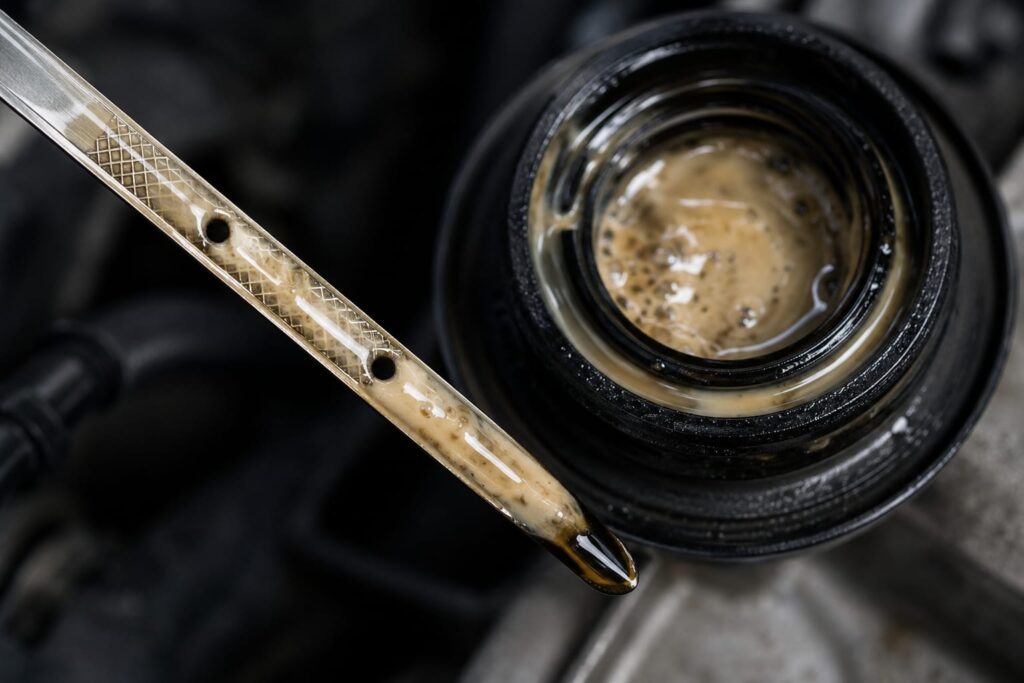
Pull the dipstick or crack open the oil fill cap, and if you see a thick, pale, milkshake-like film instead of clean oil, that’s coolant mixing into the crankcase. It’s one of the more visually obvious signs something’s wrong, and it tends to get people moving on a diagnosis faster than almost any other symptom.
One thing worth knowing before you assume the worst: a small amount of light discoloration can occasionally show up from condensation on very short trips in cold climates, especially if a car sits for long stretches without a full warm-up drive. That’s usually a thin film, not the thick, mayonnaise-like consistency you get from an actual coolant leak. If what you’re looking at is genuinely milky and doesn’t clear up after a longer drive, it’s worth taking seriously.
Full breakdown: see our Milky Oil / Coolant-Contaminated Oil guide for what different levels of contamination actually indicate.
Overheating — Cause of the Failure, or a Symptom of It?
This is one of the more confusing parts of diagnosing a blown head gasket, because overheating can be either the reason the gasket failed in the first place or the result of a gasket that’s already failing.
When combustion gases leak into the cooling system through a breached gasket, they create pockets of pressure and air bubbles that interfere with how coolant actually flows. The system starts losing its ability to move heat efficiently, and the temperature gauge climbs — sometimes gradually, sometimes in a sudden spike under load, like towing or highway driving on a hot day. At the same time, chronic overheating from something unrelated (a failing water pump, a stuck thermostat, a cracked radiator) is one of the most common root causes of gasket failure to begin with, since it’s the thermal stress that eventually breaks the seal down.
If your car overheated once and you’re now seeing other symptoms, there’s a reasonable chance the overheating caused the gasket to fail. If you’ve never had an overheating issue but you’re suddenly seeing a rising temperature gauge alongside white smoke or milky oil, the gasket failure is likely what’s driving the new overheating.
There’s a practical way to narrow this down. If the temperature gauge only spikes under specific conditions — towing, climbing a long grade, sitting in traffic on a hot day — and returns to normal once the load eases, that pattern fits a gasket that’s leaking gas into the cooling system intermittently. If the car runs hot consistently regardless of load, the root cause is more likely somewhere else in the cooling system, and the gasket damage (if any) may be a downstream effect rather than the original problem.
Full breakdown: see our Blown Head Gasket Overheating guide for how to tell which came first.
Bubbles in the Coolant Reservoir: The Radiator Cap Test
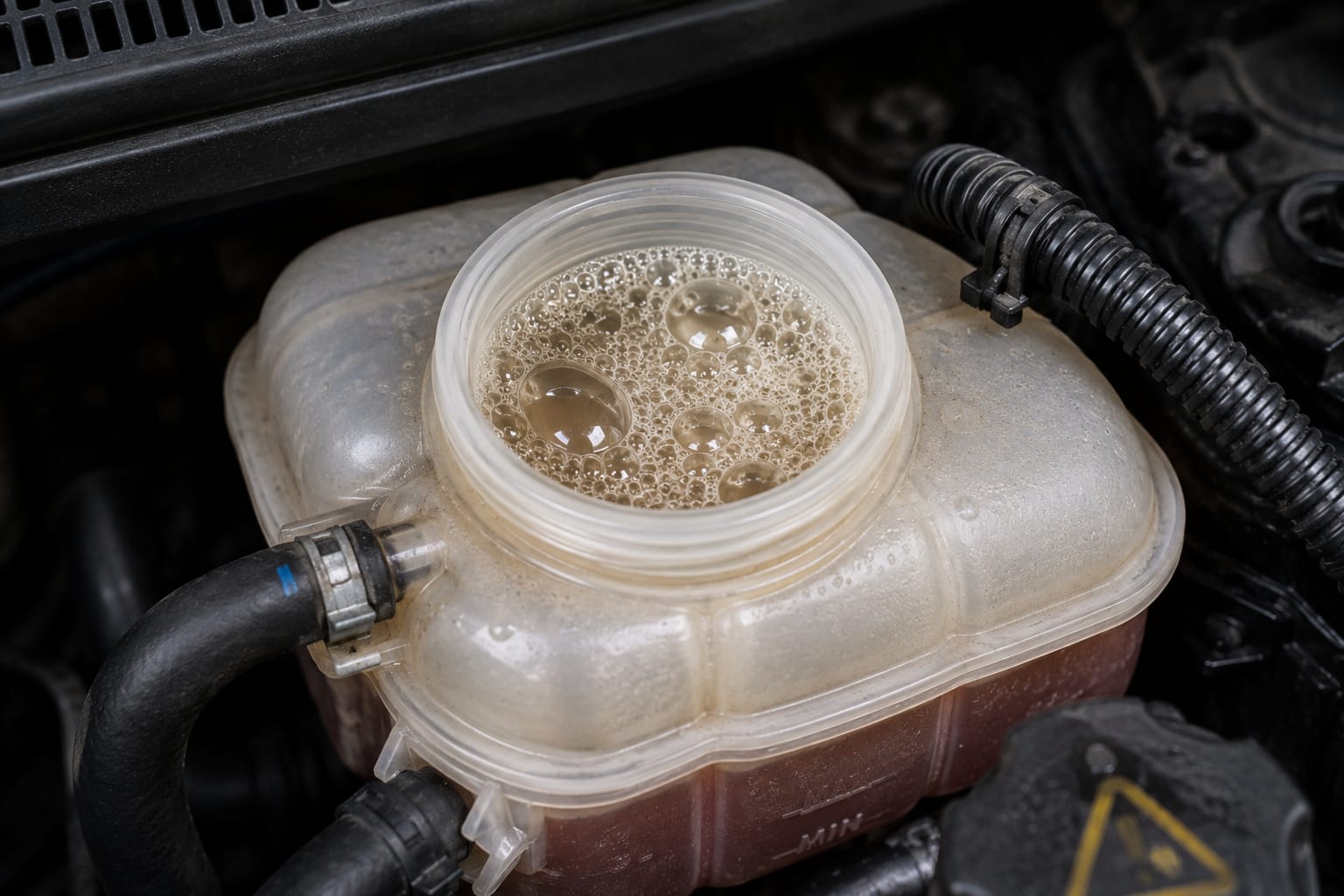
One of the more direct ways to see a gasket problem in action, without any special tools, is watching the coolant reservoir with the engine idling and the radiator cap off. If combustion gas is leaking into the cooling system, you’ll often see bubbling that gets more pronounced when the engine is revved.
A word of caution here: this test should only be done on a cool or warm engine, never a hot one — removing a radiator cap under pressure can cause scalding coolant to spray out. If you’re not confident doing this safely, it’s better left to a mechanic, who can pair it with a proper chemical block test for a more reliable result.
Full breakdown: see our Coolant Reservoir Bubbles / Radiator Cap Test guide for the full step-by-step process.
Coolant Disappearing With No Puddle Underneath
If you keep topping off the coolant reservoir and there’s no sign of a leak anywhere under the car — no drips, no wet spots, no crusty residue near hoses or the radiator — that missing coolant is very likely going somewhere internally. Past a compromised head gasket, it usually ends up either burning off inside a cylinder (which is where the white smoke comes from) or mixing into the oil (which is where the milky residue comes from).
This symptom on its own can be easy to dismiss, especially if nothing else seems obviously wrong yet. It’s worth treating “coolant keeps vanishing” as a real warning sign rather than something to keep topping off indefinitely.
Full breakdown: see our Coolant Disappearing With No Puddle guide for what it usually means when this happens.
Rough Idle, Misfires, and Why It’s Often One Cylinder
When coolant or combustion gas leaks into a cylinder through a failed gasket, it disrupts the combustion process in that cylinder specifically — which is why a lot of drivers notice a rough idle or a misfire that seems to come from one particular spot in the engine rather than everywhere at once. A compression test can often confirm this, showing unusually low or uneven readings between adjacent cylinders if the gasket has failed between them.
Full breakdown: see our Rough Idle & Misfires guide for how to confirm it with a compression test.
The Sweet Smell Coming From the Exhaust
Burning coolant has a distinct, sweet smell that’s genuinely different from burning oil, which tends to smell sharper and more acrid. If you notice a faintly sweet odor around the tailpipe, especially alongside smoke or a rising temperature gauge, it’s another data point pointing toward coolant getting into the combustion chamber.
Full breakdown: see our Exhaust Smoke Color & Smell guide for a side-by-side comparison of what each smell and color combination usually means.
Could It Be a Cracked Cylinder Head Instead?
A cracked cylinder head can produce a lot of the same symptoms as a blown gasket — white smoke, coolant loss, overheating, even milky oil — which is part of why a proper diagnosis matters instead of just guessing based on symptoms alone. The two problems are also often connected: chronic overheating severe enough to blow a gasket can, in some cases, warp or crack the head itself, especially if the vehicle kept running hot for an extended period before the issue was caught.
If a shop tells you the head needs to be checked for cracks or warping as part of a gasket diagnosis, that’s a normal and important step, not an attempt to upsell you. A new gasket installed on a warped or cracked head won’t hold a seal for long, regardless of how good the gasket itself is.
Full breakdown: see our Signs of a Cracked Cylinder Head guide.
What Actually Causes a Head Gasket to Blow
A handful of causes show up again and again:
Chronic or repeated overheating is the single biggest factor. Even one serious overheating event can be enough to compromise the seal, and repeated milder overheating over years of driving has a cumulative effect.
A defective gasket from the factory happens occasionally, though it’s relatively rare compared to the other causes on this list — manufacturing defects do slip through, but they’re not usually the first thing to suspect.
Improper installation is a bigger factor than a lot of people expect. A gasket torqued in the wrong sequence, torqued to the wrong spec, or installed on a head or block surface that wasn’t properly resurfaced can fail early even if the gasket itself was perfectly good. This is also why a repeat head gasket failure — a car that’s already had one gasket replaced and then blows another within a year or two — often points back to installation quality rather than a second unlucky coincidence. Reused torque-to-yield bolts, a deck surface that wasn’t checked for flatness, or a torque sequence that wasn’t followed precisely can all shorten a new gasket’s life dramatically.
Age and heat-cycle fatigue matter too, especially on higher-mileage vehicles that have been through tens of thousands of heating and cooling cycles. Even a well-built gasket has a practical service life.
Poorly executed cooling system repairs, including some aftermarket chemical stop-leak products, can occasionally make things worse rather than better if they clog small passages or interact badly with the gasket material.
Full breakdown: see our What Causes a Head Gasket to Fail guide.
Can You Still Drive on a Blown Head Gasket?
Short answer: sometimes, for a while — but it’s a risk, and how much risk depends heavily on which symptom you’re dealing with.
A very minor leak that hasn’t caused noticeable coolant loss or oil contamination might let you drive cautiously for a short period, ideally just long enough to get to a shop. But a blown head gasket is not a stable problem. It tends to get worse, sometimes quickly, and the failure mode can escalate from a small leak to a warped cylinder head or even a cracked engine block, particularly if the car overheats even once while you’re driving on it.
If you’re seeing a rising temperature gauge, significant white smoke, or oil that’s visibly contaminated, the safer move is to stop driving and get the car towed rather than trying to nurse it to a shop under its own power. An engine that overheats badly while already dealing with a gasket problem can turn a moderate repair into a full engine replacement in a single trip.
Full breakdown: see our Can You Drive on a Blown Head Gasket guide.
What Happens If You Keep Driving on It Anyway
The progression usually looks something like this: a small leak lets combustion gas or coolant cross where it shouldn’t, which either contaminates the oil (reducing lubrication where the engine needs it most) or lets coolant loss build up until the engine starts running hot. Running hot repeatedly stresses the cylinder head, which can warp or crack it. A warped or cracked head won’t seal properly even with a brand-new gasket, which turns a gasket-only repair into a head replacement or resurfacing job. In the worst cases, sustained severe overheating can crack the engine block itself, which is a repair that often costs more than the car is worth. None of this happens instantly, which is exactly why it’s tempting to keep driving “just a little longer.” But each of those stages makes the eventual repair more expensive, which is the main reason mechanics tend to push for prompt attention once a gasket problem is confirmed.
General Engine Symptoms That Sometimes Point Back to the Gasket
A few other symptoms show up less consistently but are still worth knowing about. A noticeable loss of power or acceleration, separate from a specific misfire, can happen when compression is bleeding between cylinders or into the cooling system. Some drivers also notice a faint but persistent coolant smell inside the cabin, especially at idle, which can happen if gas pressure is pushing exhaust byproducts back through the cooling system and out through the heater core. And on engines where the failure is affecting oil pressure — either through dilution or through a leak path near an oil passage — a flickering or illuminated oil pressure warning light is worth taking seriously rather than dismissing as a sensor issue.
None of these are as diagnostic on their own as white smoke or milky oil, but combined with one or two of the more specific symptoms above, they add confidence to a diagnosis.
Full breakdown: see our General Failing Engine Symptoms guide.
Blown Head Gasket vs. Other Engine Problems That Look Similar
A few other issues can mimic a blown gasket closely enough to cause confusion:
A failing water pump or a stuck thermostat can cause overheating on its own, with no smoke or oil contamination — the giveaway is usually the absence of milky oil or exhaust smoke.
A clogged or failing radiator produces similar overheating symptoms but again without the smoke, sweet smell, or oil contamination that point specifically to a gasket problem.
A leaking intake manifold gasket (a different gasket entirely) can sometimes cause a rough idle and coolant loss in certain engine layouts, which is one reason a proper test — not just symptom-matching — matters before committing to a head gasket repair.
Worn valve seals or piston rings can produce blue smoke too, but that smoke usually smells and looks different from coolant-burning smoke, and it isn’t paired with milky oil or coolant loss.
This is exactly why testing matters before repair. Guessing based on symptoms alone can lead to replacing the wrong part.
Where to Go From Here
If you’ve matched several of the symptoms above and you’re fairly confident about what you’re dealing with, the next step is confirming it before you commit to a repair.
Next: our How to Test for a Blown Head Gasket guide walks through the block tester, pressure test, and compression test methods in detail, including how to read the results correctly.
Ready to repair: our Head Gasket Repair guide covers labor time by engine layout, parts beyond the gasket itself, and typical cost ranges.
Background: if you landed here without much context on what a head gasket does or why modern engines use Multi-Layer Steel construction, our complete overview of MLS head gaskets is the best place to start.